24 February, 2012

Review - "Dark River: Songs of the Civil War Era, Interpretations By Austin's Finest Musicians"


Before I begin this review, a moment of full disclosure: Chuck Pinnell, guitarist and producer of Dark River is my aunt Suzi's ex-husband and the father of my cousin, René Pinnell (who is a big wheel in the computer world. Look for his apps Hurricane Party and Forecast. Yes, I know...I know. My family is disgustingly accomplished. One day maybe I'll join them. Sigh...). What is the point? The point is twofold: One, yes I was asked by Chuck to check out this CD and was sent a review copy. Two, my relationship to Chuck and Suzi has absolutely no bearing on my opinion of the music. If I think it sucks, I will say so. As it happens, I don't think it sucks...
Nevertheless, I can easily see how one might question my objectivity in this review and think that I'm just using my blog to shill for family, however much I might protest that this isn't the case. Having said all of that, let's get to the music...

Dark River: Songs of the Civil War Era was conceived by producer Chuck Pinell, an Austin based guitarist and composer. According to his liner notes, Chuck came up with the idea for Dark River while working with fellow musician Slaid Cleaves on a film project. Chuck recruited a number of extraordinarily talented musicians to provide interpretations of songs ranging from Stephan Foster's "Hard Times" to the Irish ballad "Johnny Has Gone For A Soldier." The result is an eclectic slice of Americana; bracing as a double shot of bourbon and refreshing as a drink from a cool mountain spring.

The album kicks off, appropriately, with a rollicking version of "Shiloh" or "The Secesh". The alternate title takes its name from the secessionists of central Tennessee who lined up to fight for the Confederacy following the 1862 Battle of Shiloh. The battle was one of the bloodiest of the war: 10,700 Confederates were killed or wounded for no gain whatsoever, while the Union squeaked out a narrow victory at a cost of 13,000 killed or wounded.

"Shiloh" is performed here by fiddler Warren Hood and mandolinist Rich Brotherton. Hood's youthful voice perfectly matches that of the speaker, a brash young man bravely striding into battle following one of the Confederacy's heaviest losses. Instrumentally, the performance is pitch perfect and beautifully recorded. It is an auspicious beginning.

The rest of the album does not disappoint. Each track is unique, providing an original take on some very familiar melodies and featuring magnificent performances. The fact that several musicians show up throughout the album providing instrumental support keeps the album from feeling like a patchwork affair, a hazard of multiple-artist projects. Some highlights:

Drew Nelson's weary reading of "Hard Times", featuring a lovely harmony vocal from Tina Mitchell Wilkins; Rebecca Folsom and Celeste Krenz's angelic performance of the spiritual "Swing Low" (a song I've had particular affection for ever since my mother sang it to me as a lullaby when I was little); two lovely Irish songs performed back to back (in memory of the many Irish lads who were recruited into the Union army, some directly off the boat): Slaid Cleaves gives us a haunting and haunted rendition of "She Moved Through The Fair" while Erin Ivey keens a heartrending lament for her lost love on "Johnny Has Gone For a Soldier", an American version of the traditional "Siúil a Rúin" (with the chorus beautifully sung in Gaelic).

The album features some wonderful instrumentals that really highlight the tightness of this group of musicians: Producer Pinnell's fine reading of "The Last Rose of Summer," Rich Brotherton's version of "The Yellow Rose of Texas" and Jeff Plankenhorn, whose lovely dobro enlivens his version of "Home Sweet Home" (a song which also appeared on the Anthology ).

I would be remiss if I did not mention my own dear aunt, Suzi Stern. It was Suzi who hipped Chuck to Where Dead Voices Gather and suggested that he might contact me for a review. Suzi is also the artist on Dark River with whom I am most familiar (we lived in the same house for the first several years of my life, for cryin' out loud). So I may, again, sound biased when I say that Suzi's contribution to Dark River is a stand-out. Suzi performs a version of the minstrel show standard "Oh! Susanna" that makes the hair on your arms stand on end. While most of artists on Dark River are solidly within the bounds of folk, country, and traditional music, Suzi is a jazz musician. Her arrangement of "Oh! Susanna", which features her piano playing as well as her vocal, perfectly blends modern jazz with American Folk Music (and there is an argument to be made that jazz is as much a "folk" music as blues, but that's another post). Leah Zeger's fiddle provides a gentle counterpoint to the rubato piano line laid down by Suzi, while Chuck plunks a mean banjo, in addition to his contribution as a guitarist. Suzi holds off on the familiar "don't you cry for me" chorus, creating a tension that builds throughout the performance. It is, truly, a highlight on an album of highlights.

I don't mean to slight any of the other performances from artists like Jimmy LaFave, Jon Dee Graham, Eliza Gilkyson, James McMurtry, and Rita Hosking, all of whom are wonderful and enliven their contributions with their own unique styles. There's just too much great music to go into detail about each track. I heartily recommend Dark River: Songs of the Civil War Era to all lovers of American music, past and present.

Here's a video of Warren Hood and Rich Brotherton performing "Shiloh":


Download and listen to Suzi Stern performing "Oh! Susanna"


I would like to take this opportunity to thank Chuck for his patience. He sent me a copy of Dark River many months ago (over the summer, in fact). I like to live with an album for a while, and listen to it interspersed with other albums, before I attempt to review it. This is probably the reason I will never be a professional music critic, but I think it allows me to do justice to the music. Thanks to Chuck and to all of the artists who made this wonderful album possible...

Dark River is available on Amazon.com, CDuniverse, iTunes, and fine internet music retailers everywhere.

10 December, 2011

Review - "To What Strange Place" (Tompkins Square)


It's been months and months since I promised to post a review of To What Strange Place: The Music of the Ottoman-American Diapora (1916-1929), and even more months since I first picked up this excellent set. I have delayed posting a review for a number of reasons, some of them personal. Mainly, however, I wanted to take the time to really absorb the music. The set consists of three discs: The first two feature music recorded in the United States (primarily in New York City) by immigrants from the disintegrating Ottoman Empire. The third disc is largely made up of music recorded in the Old Country and imported to the United States.

Having a carnivorous musical curiosity, I am quite literally willing to listen to anything that comes my way. This blog is a testament to that fact. Raised primarily on Classic Rock and the Singer-Songwriters of the mid- to late-1970s (James Taylor, Carol King, Billy Joel), I was exposed to jazz and classical music through my paternal grandfather, the ineffable Harry Stern. His love of music and his passionate lust for life is the common thread that runs through the dozens of musical styles and genres I have explored over the years.

I mention this to say that I purchased To What Strange Place not out of a pre-existing familiarity with the music of this particular place and time, but out of that driving need to seek out beautiful music wherever it can be found. I freely admit that I know next to nothing about the Ottoman Empire other than the fact that it existed. I think it had something to do with the Crimean War, but I only know of that because of the Russian history I studied as an undergraduate. I know that the Ottoman Empire rose up after the collapse of the Eastern Roman Empire, and I know that Vlad Tepes (the man who inspired the fictional Dracula) spent some time resisting the Ottomans. I know that the Ottoman Turks persecuted and exterminated some two million people in what has become known as the Armenian Genocide (although other ethnic groups, including Greeks and Turkish Christians, where targets as well), now considered to be the first modern act of "Ethnic Cleansing" and a dry run for the Nazi Holocaust of the 1940s (Hitler famously defended his Final Solution by rhetorically asking, "Who remembers the Armenians?"). In other words, I came into this set knowing very little about this part of the world and almost nothing of its music.

So when I first placed the CD into my player, I was immediately transported by the strange and haunting sounds that emanated from within. Strings, strummed, plucked and bowed; reed instruments that modulate into a plaintive cry; exotic rhythms beat on weathered skins; a melting pot of music from the East transported to the melting pot of the West; a monologue of exile; a dialogue of emigrants. It is impossible to distill the experience of listening to these tracks into a few words. It helps, certainly, to read curator Ian Nagoski's notes which identify artists and provide translation for some of the lyrical content. Helpful too are Nagoski's spoken notes at the end of the third disc which help to put these sounds into historical context. Nagoski's spoken words are poetic as well as educational and bear repeated listening. Nevertheless, all the context and detail is only window dressing. The listener need not concern him or herself with understanding. The sob in Marika Papagika's voice is all the context or translation that anyone really needs. This is "Soul Music" is the truest sense of the word. From out of a dusty, forgotten past, Nagoski has resurrected a voice that calls us all - Jew, Gentile, Muslim, Atheist, Believer, Westerner, Easterner - home. A voice that goes straight to the heart of what it is to be one human being among the faceless millions; to be young and looking ahead, and to be old and looking back. We are all strangers in a strange land. Once upon a time, Africans were brought to the Americas in chains. Irish, English, Scottish, French, Danish, Dutch and German boys and girls looked eastward across a vast water that separated both space and time. All of them could open their mouths and utter this same cry. In time, we Americans gave this cry a name: We called it "the Blues." What Nagoski has brought us is a Blues Record for the ages. We all hate to see that evening sun go down.

To What Strange Place is available from Tompkins Square Music and from fine on-line music retailers everywhere.

Here's the video preview for To What Strange Place.


Download and listen to Marika Papagika performing "Smyrneiko Minore."

13 April, 2011

Rev. J.M. Gates and Garfunkle


If you've picked up Paul Simon's excellent new release So Beautiful or So What, you might have noticed a familiar voice on the lead track, "Getting Ready For Christmas Day."

What you're hearing are the dulcet tones of none other than Rev. J.M. Gates, who has received his highest profile reference in a popular song since Mott the Hoople named a song "Death May Be Your Santa Claus."

The original sermon, "Gettin' Ready For Christmas Day," was recorded in the Kimball Hotel in Atlanta, Georgia on October 2, 1941, a little over two months before the Japanese bombed Pearl Harbor. In addition to the jailer and the undertaker, Rev. Gates had no idea that Emperor Hirohito was also getting ready...

Ahh... I want to give you a talk (yeah) this morning (Alright.) from this subject – getting ready for Christmas day.
The 25th day of December. You getting ready now.

Some have had their garments (That’s true.) laid away, paying some (Yes, they is.) this week, some the next week, getting ready for Christmas day.

Some have taken their last nickel, paid it on an automobile, getting ready for Christmas day. But let me tell you something. Somebody is getting ready for you. And let me tell you, namely, the undertaker, he’s getting ready for your body. Not only that, the jailer he’s getting ready for you, Christmas day. Hmm?

And not only the jailer, but the lawyer, the police force, now getting ready for Christmas day. And let me tell you, they’re getting ready for you now, and I want you to bear it in mind that they’re getting ready.

You want to be ready. I wants to be ready, getting ready for Christmas day. Done made it up in your mind that I’m going, New York, Philadelphia, Chicago. I am going on a trip, getting ready for Christmas day.

But when Christmas comes, nobody knows where you’ll be. You might ask me. I may be layin’ in some lonesome grave, (That’s true.) getting ready for Christmas day. You may live, 24 days, hmm, and then live till the midnight hour, not be able to see the morning sun rise, getting ready for Christmas day. Getting ready, done put in for your pass, "I’m going and see my relatives in a distant land."

Getting ready, getting ready for Christmas day. Greasin’ up your gun, getting your dirk in order, getting your ice picks ready, getting ready for Christmas day.

Oh, I want to say to you, not only get ready, but be ready, get your heart ready, get your heart fixed. Go down to the Holy Ghost station, stay there till you get your hearts fixed, getting ready for Christmas day.


There's more references to African American religious music on Simon's new album. In addition to "Getting Ready For Christmas Day," the penultimate track on So Beautiful Or So What, "Love & Blessings," features a sample of a 1938 recording of "Golden Gate Gospel Train" by the Golden Gate Jubilee Quartet (later known simply as the Golden Gate Quartet). This album is positively dripping with wonderful old music!

"Gettin' Ready For Christmas Day" is available on the superb Dust-to-Digital box set, Goodbye Babylon. Well worth checking out in full...

The Shameless Plug Department: You can still become a fan of "Where Dead Voices Gather" on Facebook, however, and follow us on Twitter. Where Dead Voices Gather: Using today's technology to promote yesterday's music!

Remember that I still host "Doin' The Thing," a weekly jazz program on KRML 1410 AM and 94.7 FM in Carmel, California. The show airs from 8 PM to 10PM (Pacific Time) on Sunday nights. You can also listen online by visiting the KRML website at 8 PM Pacific, 11 PM Eastern Time. Please tune in and give me feedback!

Here's the official music video for Paul Simon's "Getting Ready For Christmas Day," featuring J.M. Gates!


Download and listen to Rev. J.M. Gates - "Gettin' Ready For Christmas Day"

27 January, 2011

Charlie Louvin - (July 7, 1927 – January 26, 2011)


R.I.P. Charlie Louvin.

Born on July 7, 1927 in Henagar, Alabama, Charles Elzer Loudermilk was one half of one of the greatest brother acts of all time. Professionally known as Charlie Louvin, Charlie and his brother Ira (April 21, 1924–June 20, 1965) began performing in 1940 and continued to work together as performing and recording artists until they disbanded in 1963. Although recording several secular songs (such as "Cash On The Barrelhead"), the Louvins were best known for their gospel recordings, particularly their 1960 album Satan Is Real, with its iconic cover. "The Christian Life" from that album was famously covered by the Byrds (featuring a young Gram Parsons) on their Sweetheart of the Rodeo album.

Following Ira's tragic death in a car accident, Charlie carried on as a solo performer, recording fourteen albums under his own name between 1965 and 1982. In 2007, Charlie began releasing new albums on the Tompkins Square label. Although his voice had deteriorated, he remained one of the masters of the country-gospel genre. Among his finestlate-period albums is Sings Murder Ballads and Disaster Songs, an album released as a companion to Tompkins Square's People Take Warning: Murder Ballads and Disaster Songs, 1913-1938.

Below is a link to "I'll Never Go Back," a song cut during a 1952 radio session by the Louvin Brothers.

I once was bound by the chains of sin.
There was no light to shine within.
Down on my knees I knelt and prayed,
And He took my burdens all away.

I'll never go back to the ways of sin.
Where the Lord found me and took me in.
He came to me in a world so black.
To the ways of sin I'll never go back.

As I travel on this narrow way,
I'll help the lost to find their way.
I'll shine my light so the world can see
What a saving grace has done for me.

I'll never go back to the ways of sin.
Where the Lord found me and took me in.
He came to me in a world so black.
To the ways of sin I'll never go back.

At the set of sun I'll be going home,
To rest my soul around the throne.
I'll bid farewell in a little while,
And change my tears for a lasting smile.

I'll never go back to the ways of sin.
Where the Lord found me and took me in.
He came to me in a world so black.
To the ways of sin I'll never go back.


The Shameless Plug Department: You can still become a fan of "Where Dead Voices Gather" on Facebook, however, and follow us on Twitter. Where Dead Voices Gather: Using today's technology to promote yesterday's music!

Remember that I still host "Doin' The Thing," a weekly jazz program on KRML 1410 AM and 94.7 FM in Carmel, California. The show airs from 8 PM to 10PM (Pacific Time) on Sunday nights. You can also listen online by visiting the KRML website at 8 PM Pacific, 11 PM Eastern Time. Please tune in and give me feedback!


Here's a clip of Charlie performing "Will You Visit Me On Sundays" in 1970.


Download and listen to The Louvin Brothers - "I'll Never Go Back"

25 December, 2010

Merry Christmas To All!


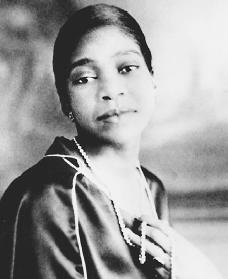
In honor of the day, here's a recording of Bessie Smith performing "At The Christmas Ball."

Hey Bessie, it's Christmas here!
Yes, yes! Hurray for Christmas!

Christmas comes but once a year, and to me it brings good cheer,
and to everyone who likes wine and beer.

Happy New Year is after that. Happy I'll be, that is a fact.
That is why I like to hear, folks I say that Christmas is here.

Christmas bells will ring real soon, even in the afternoon.
There'll be no chimes shall ring at the Christmas Ball.

Everyone must watch their step, or they will lose their rep.
Everybody's full of pep at the Christmas Ball.

Grab your partner one an' all, keep on dancing 'round the hall.
And there's no one to fall, don't you dare to stall.

If your partner don't act fair, don't worry there's some more over there.
Seekin' a chance everywhere at the Christmas Ball.


A rollicking celebration of the earthy side of the Christmas season, "At the Christmas Ball" was recorded on November 18, 1925. Joining Bessie on this recording are Joe Smith (cornet), Charlie Green (trombone) and Fletcher Henderson (piano).

This recording is available on the excellent Dust-to-Digital collection Where Will You Be Christmas Day, a disc that comes highly recommended.

The Shameless Plug Department: You can still become a fan of "Where Dead Voices Gather" on Facebook, however, and follow us on Twitter. Where Dead Voices Gather: Using today's technology to promote yesterday's music!

Remember that I still host "Doin' The Thing," a weekly jazz program on KRML 1410 AM and 94.7 FM in Carmel, California. The show airs from 8 PM to 10PM (Pacific Time) on Sunday nights. You can also listen online by visiting the KRML website at 8 PM Pacific, 11 PM Eastern Time. Please tune in and give me feedback!

Here's a 1929 soundie featuring Bessie Smith performing "St. Louis Blues."


Download and listen to Bessie Smith - "At The Christmas Ball"

20 December, 2010

Two New Discs From Dust-to-Digital

I received an early Christmas/Birthday gift in the mail today from my good friend Henry, who will be spending the holiday in Virginia with his wife and daughter.

The gift consisted of two new releases from Dust-to-Digital, my favorite record label.

The first of the two releases is Baby, How Can It Be?, a three CD collection of old time music with a romantic theme.

The second item is called The Hurricane That Hit Atlanta which features Rev. Johnny L. Jones.

Both are superb. The Jones is his second release for D2D (the first is the LP-only Jesus Christ From A to Z). It contains songs and sermons, all recorded live at his Atlanta church. Whether you believe or not, listening to this collection is as close to truly "feeling the spirit" as anyone is likely to get.

Baby, How Can It Be? is an absolute delight. Each disc contains a theme (Love, Lust, and Contempt) which is amply expanded upon through the superb musical selection. Speaking personally, it's a fun set to listen to when you're going to through a divorce. Also contains liner notes by none other than Where Dead Voices Gather
(no relation) author Nick Toches, and an odd little graphic by 78 hound R. Crumb. Both are exceptional and well worth seeking out...


14 December, 2010

And In The End...


So, here we are. The final entry in this project. It's been an extraordinary journey that has taken me through hundreds of years of history and thousands of miles, all without leaving the chair in front of my speakers. I have listened closely to music I have heard thousands of times before, and in so doing I have heard that music afresh. I have listened to the music of the Anthology of American Folk Music one track at a time, the way it was heard by its original audience in the 1920s and 30s...and the way a young Harry Smith would have heard it, too. And after more than a year of listening to two sides a week, over and over again, until every pop and hiss was as familiar to me as the sound of my own heartbeat, what have I learned?

The first thing I did after writing the last entry was to listen to the entire Anthology straight through, in order to experience it once again as a whole. In so doing, I have drawn a few conclusions, which I will set down here:

1) The Anthology was compiled at the dawn of the LP era, which is a fact that should not be overlooked. Until the advent of the LP, there was only one way to listen to recorded music: One song at a time, one side at a time. A record was a short-lived pleasure. After a little more than three minutes, a side was finished. At that point, you had only a few options. You could play the side again, turn the record over and listen to the flip side, or you could put on another record. That was it. The LP changed the way people heard music. Suddenly, a side's worth of music wasn't a little over three minutes, but twenty minutes. Freed from the time constraint of the 78, artists could stretch in ways that hadn't been possible just a few years earlier. And it took a long time for the potential of the LP to be realized. But Harry Smith saw that the LP allowed music from the 78 era (which was already in danger of obsolescence) not only to be preserved, but to be reformed into something that commented on the music, its era, and on the present as well. One might argue that by compiling the Anthology, Harry Smith invented the mixtape, the bootleg, and the historical reissue as we know them. The historical reissue part speaks for itself. The Anthology was a mixtape in that Smith took the music created by others to make a unique personal statement. It was a bootleg in that almost all of the music included was under copyright to various extant record labels at the time. It is important to remember that prior to this moment in history, none of these things had been possible. Harry Smith was looking backwards in terms of the music he preserved, but he was looking forward in the way he preserved it. It's strange to think that Smith was on the cutting edge of technology as he was making available music that represented a lost part of America's cultural history. In that sense, a song like "Peg and Awl," a song about the industrial revolution, stands as an emblematic selection. "They've invented a new machine," the Carolina Tar Heels sing, "Prettiest thing you've ever seen." Indeed, they had invented a new machine. It spun at 33 1/3 RPM.

2) As I've noted before, much has been made of the sequencing on the Anthology and how Smith did not place the songs in a chronological sequence according to recording date. But as we've seen throughout this project, Smith did not sequence the songs randomly. Beginning with the "Ballads" volume and continuing at least through the two discs of the "Social Music" volume, the tracks are sequenced chronologically by the age of the song in question. On the "Songs" volume and the "Lost" volume, the songs are usually sequenced thematically. In many cases, Smith placed songs on similar subjects in sequence. In some cases, Smith chose songs that echoed one another lyrically or musically. This was, once again, something that could not have been done during the 78 era. The very idea of arranging songs on a recording in any kind of sequence was something unheard of, impossible, just a few years before.

3) I've tried to resist the temptation to romanticize the world described in the music heard on this collection. That it sounds so alien is one of the reasons it is tempting to imagine that this music represents a "simpler" time. I submit that when taken together, the world represented on the sixteen sides of Anthology is nearly baffling in its complexity. There's nothing simple about a world that demands a song like Rev. Sister Mary Nelson's "Judgment" or Bascomb Lamar Lunsford's "I Wish I Was A Mole In The Ground." Not because the pressures that led people in the 20s and 30s to wish for a just God's vengeance or for a sense of home were so alien to us today. Quite the opposite. These songs show that people then were just as lost in the world as we are today. We love and hate and die just as they did. We all know that the Titanic sank in 1912. We forget that it also sank in 1941. And in 1968. And it 2001. Because man never stops building "unsinkable" ships, and fate never fails to sink them.

What's left is the music, and in the end, that's all we need.

Thank you for following this blog and for your moral support of the last year. Enjoy the music, because the music is all that remains.