Oh, hello, The Internet! I didn’t see you there! Come on in! Have a seat. Just clear off one of those chairs over there. What’ve you been up to? Getting worse than ever before? Jam packed with racists? Cluttered with AI slop? Cool, cool. Hey, how’d that whole “NFT” thing work out for you? Ouch! Less said the better, huh?
I see by the old calendar on the desktop that it’s been nearly another six whole years since I updated this blog, which means it’s time for me to climb out of my hole in the ground and give the place a good dusting. What have I been up to? Hanging on by my fingernails, just like everybody else!
Well, maybe I’ve been doing a little more than that. Mainly, I’ve been thinking. And when I start thinking, I start writing. And when I start writing…well, you all saw what happened last time.
I’m still listening to music, including the old Anthology of American Folk Music. I still listen to it every Fourth of July. But lately, my thoughts have been getting a little more…how shall one say? Philosophical? Up-my-own-ass? Sounds legit.
The music Harry Smith collected on the four volumes of the Anthology was the music of the common people and it expressed everything about their lives, even if the recording artists didn’t necessarily write the songs. Take “No Depression” by The Carter Family.: “I’m goin’ where there’s no depression/To a lovely land that’s free from care/I’ll leave this world of toil and trouble/My home’s in heaven/I’m goin’ there.” That longing to escape from the cares of the world is universally recognized. We’ve all felt it, even if we haven’t expressed it in quite the same way. For me, the desire to escape this sinful world isn’t about accepting my lot here and dreaming of a better world after death. If anything, that attitude is the problem, isn’t it? Leave the world to itself. God will take care of it eventually. He’ll separate the sheep from the goats! What’s God got against goats anyway?
No, to me the desire to escape from the troubles of the modern world isn’t about hoping for something better later on. It’s about the desire to do better for ourselves in this world. To that end, I’ve been tinkering with a concept I call “Abundant Sufficiency”. It’s the idea that enough exists in the world for everyone to have enough to live with dignity. I’ve been writing about it and posting to a new blog I’ve set up on this very website! If you’re interested, you can check it out here: https://abundantsufficiency29.blogspot.com/
I hope you’ll join me over there. You can read my half-baked musings and leave me comments telling me what a dirty commie I am! It’ll be a hoot!
Set Four: The "Lost" Volume; Disc Two; Track Eight: "No Depression In Heaven" performed by The Carter Family. Recorded in New York on June 9, 1936. Original issue Decca 5242.
"No Depression In Heaven" was written by gospel songwriter and publisher James D. Vaughan, who was born in Giles County, Tennessee on December 14, 1864. This is one of those coincidences/connections that would have delighted Smith, since Giles County is the place that Jim Jackson intends to "go back" to in "Old Dog Blue."
In addition to his contributions as a songwriter, Vaughan also founded WOAN, one of the first radio stations in Tennessee. He also started Vaughan Phonographic Records, the first record company based in the South. He was a great influence on A.P. Carter, who recorded several of Vaughan's compositions. James D. Vaughan died on February 9, 1941. He would be inducted into the Southern Gospel Hall of Fame in 1997.
"No Depression In Heaven" has been covered numerous times by artists ranging from the New Lost City Ramblers to Sheryl Crow. The song was perhaps most famously recorded as the title track to alternative country pioneers Uncle Tupelo's debut album, No Depression. It became so identified by the alternative country music that it inspired the title of No Depression, the most prominent alt country magazine. The alternative country music is sometimes called the "No Depression" movement.
For fear the hearts of men are failing, For these are latter days we know. The Great Depression now is spreading, God's word declared it would be so.
I'm going where there's no Depression, To the lovely land that's free from care. I'll leave this world of toil and trouble, My home's in Heaven, I'm going there.
In that bright land, there'll be no hunger. No orphan children cryin' for bread. No weeping widows, toil or struggle. No shrouds, no coffins, and no death.
I'm going where there's no Depression, To the lovely land that's free from care. I'll leave this world of toil and trouble, My home's in Heaven, I'm going there.
This dark hour of midnight nearing, Tribulation time will come. The storms will hurl in midnight fear And sweep lost millions to their doom.
I'm going where there's no Depression, To the lovely land that's free from care. I'll leave this world of toil and trouble, My home's in Heaven, I'm going there.
Despite the speculation in Spottswood's notes that this song should have traded places with "Milk Cow Blues" in order to be part of the sequence of topical songs that began with "How Can A Poor Man Stand Such Times And Live?", "No Depression In Heaven" isn't really a "topical song." The song does make reference to then-current events, but unlike "How Can A Poor Man..." or either of Uncle Dave Macon's songs on this volume, "No Depression In Heaven" isn't so much about the events of the 1930s as it is about transcending those events. "No Depression In Heaven" is a song about how ultimately unimportant the circumstances of this world are, when compared with the life to come.
Had it appeared on the original Anthology, there is no doubt that "No Depression In Heaven" would have appeared on the religious disc of the "Social Music" volume. This is a song that promises eternal salvation and liberation from the travails of the material world. The Great Depression is simply the latest of a growing litany of miseries that will be eventually relieved in death.
Vaughan's lyric also makes reference of the end of the world. The speaker in the song refers to 1930s as the "latter days" and speaks, in the last verse, of the "tribulation time" that will come. This refers to the events foretold in the revelation of St. John the Divine. Of course, the world did not end in Vaughan's lifetime, nor in the lifetime of any members of the original Carter Family. People have been predicting the end of the world, based on the prophesies of the New Testament, since the words of St. John were written down (indeed, these events were supposedly going to happen within the lifetime of the Apostles). Despite their perfect record of being wrong, Christians continue to predict that we are living in the last days. Most recently, this type of thinking has made the fortune of author and huckster Tim LaHaye, whose bestselling Left Behind books purport to give an "authentic" and "scholarly" glimpse of the tribulation to come, all dressed up in paranoia and superstition. Get ready for the rapture, but be sure to give Mr. LaHaye your money in the meanwhile.
The Carter Family's reading of this allegedly uplifting song is fascinating. Featuring dual guitars played by Sara and Maybelle Carter, along with the supporting vocal of A.P. Carter (who hasn't been heard on the Anthology in some time), "No Depression In Heaven" has become one of the definitive Carter Family records. The odd thing is that for all comfort Sara is supposedly bringing through the lyric, Sara herself doesn't sound very happy about the whole thing. Her somber, deadpan reading cuts against the triumphant tone of the lyric. Perhaps there is no Depression in Heaven, but Sara doesn't make heaven sound very inviting.
"No Depression In Heaven" is the last of four songs in a row by artists who appeared on the original Anthology. It is also the last song on the Anthology by the Carter Family, who contribute a whopping seven tracks to the set. Not only are there more songs by the Carter Family than any other artist, but the Carters are the only artist to appear on all four volumes. As was mentioned in the entry for "John Hardy Was A Desperate Little Man," it is only fitting that Smith gave over so much space to the Carter Family, as it can easily be argued that they are among the most important musicians in American history.
The Shameless Plug Department: You can still become a fan of "Where Dead Voices Gather" on Facebook, however, and follow us on Twitter. Where Dead Voices Gather: Using today's technology to promote yesterday's music!
Remember that I still host "Doin' The Thing," a weekly jazz program on KRML 1410 AM and 94.7 FM in Carmel, California. The show airs from 8 PM to 10PM (Pacific Time) on Sunday nights. You can also listen online by visiting the KRML website at 8 PM Pacific, 11 PM Eastern Time. Please tune in and give me feedback!
Here's Uncle Tupelo (the band that would later give the world Wilco and Son Volt) performing "No Depression In Heaven" during a 1992 appearance in Chicago.
This a version of "No Depression" performed by Sheryl Crow. The video makes explicit tribute to the Carter Family, and to American Folk Music in general.
Here's a version performed by Jeff Crane, Terry Dignon & Anthony Tino live at the Rosendale Cafe, April 28, 2009.
"Hello, Stranger" is a basic 12-bar blues performed as a duet between Sara and Maybelle Carter, the two vocalists alternating overlapping lines.
Hello stranger, put your loving hand in mine. Hello stranger, put your loving hand in mine. You are a stranger, and you're a pal of mine.
Get up rounder, let a working man lay down. Get up rounder, let a working man lay down. You are a rounder, but you're all out and down.
Every time I ride Six and Fourth street car. Oh, every time I ride Six and Fourth street car. I can see my baby peeping through the bars.
She bowed her head, she waved both hands at me. She bowed her head, she waved both hands at me. I'm prison bound, I'm longing to be free.
Oh, I'll see you, when your troubles are like mine. Oh, I'll see you, when your troubles are like mine. Oh, I'll see you, when you haven't got a dime.
Weeping like a willow and mourning like a dove. Weeping like a willow and mourning like a dove. There's a girl up the country that I really love.
Hello stranger, put your loving hand in mine. Hello stranger, put your loving hand in mine. You are a stranger, and you're a pal of mine.
"Hello, Stranger" marks the second appearance by the Carter Family on volume four and their sixth appearance overall on the Anthology. The Carter Family will turn up one last time on this disc.
"Hello, Stranger" tells the story of a man on his way to prison. The speaker never says what he's going to jail for, but we know that he's leaving his girl behind. The speaker appears to be addressing most of the song to a fellow convict.
A.P. Carter was a close friend and associate of African-American songster Leslie Riddle (1905-1980). Riddle frequently accompanied Carter on his "song collecting" trips and is frequently cited, along with Jimmie Rodgers, as a primary influence on the Carters when it came to recording blues songs.
"Hello, Stranger" went on to become one of the Carter Family's signature songs and is today regarded as a Country Music standard.
This track kicks off the last disc of the Anthology.
The Shameless Plug Department: You can still become a fan of "Where Dead Voices Gather" on Facebook, however, and follow us on Twitter. Where Dead Voices Gather: Using today's technology to promote yesterday's music!
Remember that I still host "Doin' The Thing," a weekly jazz program on KRML 1410 AM and 94.7 FM in Carmel, California. The show airs from 8 PM to 10PM (Pacific Time) on Sunday nights. You can also listen online by visiting the KRML website at 8 PM Pacific, 11 PM Eastern Time. Please tune in and give me feedback!
Here's a very dapper singer/guitarist who calls himself "The Rooster" performing a soulful version of "Hello, Stranger."
This is the Dry Bones Band performing a version of "Hello, Stranger" with two guitars and percussion.
Set Four: The "Lost" Volume; Disc One; Track Three: "Black Jack David" performed by The Carter Family. Recorded in Chicago on October 4, 1940. Original issue Conqueror 9574.
"Black Jack David" is a variant of Child 200, "The Gypsy Laddie." It is a traditional Scottish folk tune. James Francis Child dates the earliest printed version of this song to the early 1700s. The first recording of this song was made in 1939 by Cliff Carlisle for Decca. The Carter Family's version came out a year later. It has been recorded literally dozens of times by artists ranging from Woody Guthrie to the White Stripes.
Black Jack David came ridin' through the woods, And he sang so loud and gaily. Made the hills around him ring, And he charmed the heart of a lady. And he charmed the heart of a lady.
"How old are you, my pretty little miss? How old are you, my honey?" She answered him with a silly little smile, "I'll be sixteen next Sunday. I'll be sixteen next Sunday."
"Come go with me, my pretty little miss. Come go with, me my honey. I'll take you across the deep blue sea, Where you never shall want for money. Where you never shall want for money."
She pulled off her high-heeled shoes, They were made of Spanish leather. She put on those low-heeled shoes, And they both rode off together. And they both rode off together.
"Last night I lay on a warm feather bed, Beside my husband and baby. Tonight I lay on the cold, cold ground, By the side of Black Jack David. By the side of Black Jack David."
After four appearances on the original Anthology, the Carter Family return with the first of three recordings on volume four. "Black Jack David" is, like the song that preceded it, a ballad which might have found a home on volume one of the original set (although its 1940 recording date puts outside of the perimeters of Smith's original survey). Like "Dog and Gun," however, "Black Jack David" offers a different viewpoint, at least in terms of its treatment of women.
"Black Jack David" tells the story of the titular character, depicted in the song as a free wheeling rambler (a gypsy in the version collected by Child, although no mention is made in this version of David's ethnic background). David charms the heart of a young (not yet sixteen) married woman, who drops everything and leaves her husband and child.
This is similar to "The House Carpenter," but with a significant difference: In that song, the young woman who leaves her husband and child is punished for her transgression when her ship sinks (as was noted in the entry for Ashley's recording, earlier versions of the ballad had a supernatural element. The young wife is punished doubly; first for betraying her dead lover by marrying a house carpenter, and then for leaving her husband for the lover's ghost). The young lady in "Black Jack David" doesn't end so unhappily. In fact, the song's ending is subject for interpretation. The young woman's statement that
"Last night I lay on a warm feather bed, Beside my husband and baby. Tonight I lay on the cold, cold ground, By the side of Black Jack David. By the side of Black Jack David."
could be interpreted as regret. The contrast of the "warm feather bed" with "the cold, cold ground" certainly seems to imply a value judgment. It could, however, be a simple observation; a statement of fact: "This is how things are." The young woman certainly does not seem to suffer for her decision.
The Carter Family's reading of "Black Jack David" thoroughly Americanizes the song. The 18th century gypsy lad has been transformed into a romantic Western outlaw figure, with more in common with Jesse James than with Robin Hood.
The performance (which features Sara and Maybelle Carter sharing the singing throughout the song, as well as both performing on guitar) also seems to support the theory that the young woman does not regret her decision to elope with Black Jack David. The instrumental performance is buoyant. The two women intertwine their vocals in such a way that it is difficult to distinguish between them. There is none of Sara Carter's usual deadpan fatalism. A.P. Carter, who never participated in performances in any other capacity than as a vocalist, is conspicuously absent from this recording. This is a woman's song, defiant in its defense of the young wife's power to choose her own fate, although she isn't anywhere near as powerful as the lady in "Dog and Gun".
While A.P.'s absence on this recording may not have had anything to do with it, it should be noted that by 1940, Sara and A.P.'s marriage was over.
The Shameless Plug Department: It's been a long time since I've done a podcast episode of "Where Dead Voices Gather." This is partly due to my busy work schedule and partly due to the fact that I now put together a two-hour weekly radio show in my spare time. I do have plans for a seventh episode of "Where Dead Voices Gather," which I hope to put together in the next week or so. In the meantime, you can still listen to the old episodes.
You can also become a fan of "Where Dead Voices Gather" on Facebook and follow us on Twitter. Where Dead Voices Gather: Using today's technology to promote yesterday's music!
Remember that I host "Doin' The Thing," a weekly jazz program on KRML 1410 AM and 94.7 FM in Carmel, California. The show airs from 8 PM to 10PM (Pacific Time) on Sunday nights. You can also listen online by visiting the KRML website at 8 PM Pacific, 11 PM Eastern Time. Please tune in and give me feedback!
Here's a '70s television performance of "Black Jack David" by Waylon Jennings.
Set Three: Songs; Disc One; Track Eleven: "Single Girl, Married Girl" performed by The Carter Family. "Vocal solo (by Sara Carter) with autoharp, guitar." Recorded in Bristol, Tennessee on August 2, 1927. Original issue Victor 20937A.
"Single Girl, Married Girl" is the fourth recording by the Carter Family to appear on the Anthology. For biographical information on the Carter Family, see the entry for "John Hardy Was A Desperate Little Man."
This record was recorded at the historic Bristol Sessions and was among the first records by the Carter Family to be released. Its immediate success launched the group on an historic career as country music's "first family."
The song, like so many others on this set, is about love and (in this case) marriage.
Single girl, single girl, She's going dressed fine. Oh, she's going dressed fine.
Married girl, married girl, She wears just any kind. Oh, she wears just any kind.
Single girl, single girl, She goes to the store and buys. Oh, she goes to the store and buys.
Married girl, married girl, She rocks the cradle and cries. Oh, she rocks the cradle and cries.
Single girl, single girl, She's going where she please. Oh, she's going where she please.
Married girl, married girl, A baby on her knees. Oh, a baby on her knees.
"Single Girl, Married Girl" is about as elemental as it gets. The song contrasts the lives of a typical single girl and a married girl. The song is very pessimistic about marriage. The single girl gets to dress up, spend her money, and go wherever she likes. The married girl dresses plainly, cries as she rocks the cradle, and sits with a baby on her knee. The song has nothing positive to say about the institution of marriage. It also focuses almost exclusively on the negative impact marriage has on the lives of women. It would be interesting to know where and how this song originated. Was it, in fact, written by a woman? Did women sing it as a way of warning younger women about marrying too young? Or was it seen as a humorous song? A parody of a woman's lament?
Reportedly, Ralph Peer had to coax Maybelle and Sara Carter into recording this song, as A.P. "didn't like it."
It's quite easy to see why this song took off the way it did. The instrumental backing (featuring Maybelle Carter's energetic picking and Sara's autoharp) is upbeat and immediately engaging. Sara Carter's laconic voice sounds simultaneously youthful and world-weary. You can tell that she knows whereof she speaks (even though it was Maybelle who was heavy with child during this recording session).
A.P. Carter, perhaps wisely, stays out of this one completely.
The Shameless Plug Department: The sixth episode of the "Where Dead Voices Gather" podcast is finally up! It's an all fiddle episode featuring fiddle tunes from both black and white artists, as well as three tracks from the Middle East! Also available on iTunes! Subscribe today so you don't miss a single episode. It's free and it doesn't hurt. Who can ask for more?
You can also become a fan of "Where Dead Voices Gather" on Facebook and follow us on Twitter. Where Dead Voices Gather: Using today's technology to promote yesterday's music!
I would like to announce that beginning May 9, 2010, I will be hosting "Doin' The Thing," a weekly jazz program on KRML 1410 AM and 94.7 FM in Carmel, California. The show airs from 8 PM to 10PM (Pacific Time) on Sunday nights. You can also listen online by visiting the KRML website at 8 PM Pacific, 11 PM Eastern Time. Please tune in and give me feedback!
Here's Petra Haden (daughter of bassist Charlie Haden and a member of the Haden Triplets)performing a delightful version of "Single Girl, Marred Girl" from the Harry Smith Project.
Set Two: Social Music; Disc Two; Track Thirteen: "Shine On Me" performed by Ernest Phipps and His Holiness Singers. "Vocal group with violin, piano, mandolin, guitars and clapping." Recorded in Bristol, Tennessee on November 29, 1928. Original issue Bluebird 5540A.
Ernest Phipps and His Holiness Singers were first recorded at the historic Bristol Sessions (where the Carter Family, Jimmie Rogers, Eck Dunford, and the Stoneman Family were also first recorded). No biographical information is available on Phipps nor is anything known about the other singers and musicians who performed on this recording. "Shine On Me" was recorded a little over a year after Phipp's recording debut.
According to Jeff Place's notes to the 1997 reissue of the Anthology, Phipps and his musicians were all members of an "Anglo-American holiness church in Kentucky."
Must Jesus bear the cross alone, And all the world go free? No, there's a cross for everyone, And there's a cross for me.
Whoa, shine on me, Lord, Shine on me. Let the light from the lighthouse, Shine on me.
Whoa, shine on me, Lord, Shine on me. Let the light from the lighthouse, Shine on me.
Sure, I must fight, if I shall reign. Increase my courage, Lord. Oh, bear the toil endure the pain Supported by Thy Word.
Whoa, shine on me, Lord, Shine on me. Let the light from the lighthouse, Shine on me.
Whoa, shine on me, Lord, Shine on me. Let the light from the lighthouse, Shine on me.
Must I be carried to the sky, On flowery beds of ease? While others false do win the prize, And sail through bloody seas.
Whoa, shine on me, Lord, Shine on me. Let the light from the lighthouse, Shine on me.
Whoa, shine on me, Lord, Shine on me. Let the light from the lighthouse, Shine on me.
"Shine On Me," according to Smith's original notes, is a version of a hymn that is usually titled "Maitland. C.M." by George N. Allen. Allen (1812-1877) was the composer of the melody only, which was put to the text "Must Jesus Bear The Cross Alone" by Thomas Shepherd (1665-1739). Shepherd's original text reads as follow:
Must Jesus bear the cross alone, And all the world go free? No, there's a cross for everyone, And there's a cross for me.
How happy are the saints above, Who once went sorrowing here; But now they taste unmingled love, And joy without a tear.
The consecrated cross I'll bear Till death shall set me free; And then go home my crown to wear, For there's a crown for me.
Upon the crystal pavement, down At Jesus' piercèd feet, Joyful, I'll cast my golden crown, And His dear Name repeat.
O precious cross! O glorious crown! O resurrection day! Ye angels, from the stars flash down, And bear my soul away.
Note that the chorus ("Shine on me, Lord, shine on me") was not a part of Shepherd's original lyrics. The chorus seems to have come from a Negro Spiritual titled "Shine on Me." The lyrics to that song are as follows:
Shine on me. Shine on me. Let the Light from the lighthouse shine on me. Shine on me. Shine on me. Let the Light from the lighthouse shine on me.
I heard the voice of Jesus say, “Come unto to Me and rest. Lay down thou weary one lay down Thy head upon My breast.”
Shine on me. Shine on me. Let the Light from the lighthouse shine on me. Shine on me. Shine on me. Let the Light from the lighthouse shine on me.
With pitying eyes the Prince of Peace Beheld our helpless grief He saw, and O amazing love! He came to our relief.
Shine on me. Shine on me. Let the Light from the lighthouse shine on me. Shine on me. Shine on me. Let the Light from the lighthouse shine on me.
Note the lyric from the hymn "A Heard The Voice Of Jesus Say" in the first verse. A version of this spiritual (with completely different lyrics, except for the chorus) was recorded under the title "Let Your Light Shine On Me" by Blind Willie Johnson. The text of the Johnson song is as follows:
Let it shine on me, Let it shine on me. Let your light from the lighthouse shine on me.
Let it shine on me, Let it shine on me. Let your light from the lighthouse shine on.
My lord he's done Just what he said. Let your light from the lighthouse shine on me.
Heal the sick, And rise the dead. Let your light from the lighthouse shine on me.
Oh let it shine on, Oh let it shine on. Let your light from the lighthouse shine on me.
Shine on, Oh let it shine on. Let your light from the lighthouse shine on me.
I know I've got religion, And I ain't ashamed. Let your light from the lighthouse shine on me.
Angels in heaven, done wrote my name. Let your light from the lighthouse shine on me.
Oh let it shine on, Oh let it shine on. Let your light from the lighthouse shine on me.
Shine on, Oh let it shine on. Let your light from the lighthouse shine on me.
Oh let it shine on, Oh let it shine on. Let your light from the lighthouse shine on me.
Shine on, Oh let it shine on. Let your light from the lighthouse shine on me.
Oh let it shine on, Oh let it shine on. Let your light from the lighthouse shine on me.
Shine on, Oh let it shine on. Let your light from the lighthouse shine on me.
The question is, how did the chorus from "Shine On Me" get added to Allen and Shepherd's song?
"Shine On Me," as recorded by Phipps, consists of three verses with two rounds of the chorus following each verse. The first verse is the same as the first verse of "Must Jesus Bear The Cross Alone." The second verse is completely unintelligible to me (thanks to Jake Faulkner for his transcription of that verse), but it does not seem to correspond to any of the verses from Shepherd's text. The third verse does not come from "Must Jesus Bear The Cross Alone" at all, but rather from a song called "On The Sea of Galilee," a song the Carter Family recorded on May 9, 1935. I have been unable to find any information on the history of "On The Sea of Galilee," other than the fact that it is credited to A.P. Carter. The fact that one of the verse of that song already existed when Phipps recorded "Shine On Me" in 1928 is a strong indication that Carter got the song from someplace else, but where?
Note: Thanks to readers Peter Golden and Don Wiley for pointing out that the lyric "Must I be carried to the sky..." appears in three Sacred Harp songs: "57 Christian Soldier, 309 Living Lamb, and 513 Joyful use these words."
One final link in the chain is the fact that former blues musician and gospel pioneer Thomas A. Dorsey borrowed the melody from "Shine On Me/Maitland/Must Jesus Bear The Cross Alone" for his song "Take My Hand, Precious Lord."
On the surface, "Shine On Me" is a simple song - perhaps one of the simplest on the religious disc of the "Social Music" volume. The song is a simple declaration of faith, a desire to share in the burden of Christ, and a desire to bathe in the glory of God (here compared to the light from a lighthouse). Attempting to tease out the origins of the song proves more complicated, however. "Shine On Me" seems to be built out of at least three songs (not taking into account the mysterious second verse, which might come from still a fourth song). In some ways, this song epitomizes the folk process, in which pieces of songs are assembled into something wholly new and different. All of this calls to mind Claude Lévi-Strauss and his theory of the bricoler or "brick layer." According to Lévi-Strauss, man does not invent things out of whole cloth, but rather assembles pieces of cultural detritus into something new. "Shine On Me" is a bricolage, an assembly of disparate parts of religious songs into one glorious burst of spiritual expression.
I don't know whether Smith was aware that Phipps had made his recording debut at the same session as the Carter Family, but it seems appropriate that Phipps should follow the Carters. Whether this is just chance or whether this is one of those connections of which Smith was so fond will probably never be known.
"Shine On Me" is the first of three songs in a row that feature group vocals and large instrumental aggregations.
The Shameless Plug Department: The fifth episode of the "Where Dead Voices Gather" podcast is finally up! It's an all jazz episode featuring early jazz recordings by the Original Dixieland Jass Band, Jelly Roll Morton, Louis Armstrong, Bessie Smith, and a whole lot more! Also available on iTunes! Subscribe today so you don't miss a single episode. It's free and it doesn't hurt. Who can ask for more?
You can also become a fan of "Where Dead Voices Gather" on Facebook and follow us on Twitter. Where Dead Voices Gather: Using today's technology to promote yesterday's music!
Here's an extraordinary 2005 performance of "Shine On Me."
Set Two: Social Music; Disc Two; Track Twelve: "Little Moses" performed by The Carter Family. "Vocal trio with autoharp, guitar." Recorded in Camden, New Jersey on February 14, 1929. Original issue Victor 23641B.
With this appearance on the "Social Music" volume, the Carter Family becomes the only artists to appear on all four volumes of the Anthology.
"Little Moses" is a simple narrative song (a "religious ballad," in the words of Alan Lomax) that retells several events in the life of Moses, arguably the most important prophet in the Old Testament.
Away by the river so clear, The ladies were winding their way, And Pharaoh's little daughter stepped down in the water To bathe in the cool of the day.
Before it was dark she opened the ark And found the sweet infant was there. Before it was dark she opened the ark And found the sweet infant was there.
And away by the waters so blue, The infant was lonely and sad. She took him in pity and thought him so pretty And it made little Moses so glad.
She called him her own, her beautiful son, And sent for a nurse that was near. She called him her own, her beautiful son, And sent for a nurse that was near.
And away by the river so clear, They carried the beautiful child, To his own tender mother, his sister and brother, Little Moses looked happy and smiled.
His mother so good done all that she could To rear him and teach him with care. His mother so good done all that she could To rear him and teach him with care.
And away by the sea that was red. Little Moses the servant of God. While in Him confided, the sea was divided, As upward he lifted his rod.
The Jews safely crossed while Pharaoh's host Was drownded in the waters and lost. The Jews safely crossed while Pharaoh's host Was drownded in the waters and lost.
And away on the mountain so high, The last one that ever might see, While in his victorious, his hope was most glorious He'd soon o'er the Jordan be free.
When his labor did cease, he departed in peace And rested in the Heavens above. When his labor did cease, he departed in peace And rested in the Heavens above.
The story of Moses is related in the Old Testament books of Exodus, Leviticus, Numbers and Deuteronomy, and has also been retold numerous times in popular culture (perhaps most famously in Cecil B. DeMille's film The Ten Commandments starring Charlton Heston). Moses has been depicted by artists throughout history, including Michelangelo, William Turner, Giotto di Bondone, Gustave Doré, and countless others. His likeness has appeared in paint, marble, stained glass, wood, and bronze, among many other mediums. Images of Moses appear in the Library of Congress, the Supreme Court, and the U.S. House of Representatives. Arguably the most important prophet in Judaism, Moses is also venerated by Christians - who hold him as the embodiment of God's law - and by Muslims. Moses is mentioned 502 times in the Koran, more than Noah, Jesus and Abraham, and is often described in ways that parallel the prophet Mohammad. The story of Moses was also central to African American slaves. The song "Go Down Moses" was one of the most popular Negro spirituals. Moses was famously invoked by Dr. Martin Luther King, Jr. when he declared that he had "been to the mountaintop."
The song "Little Moses" focuses primarily on the early life of Moses, particularly the story of his being set adrift in the Nile and found among the reeds and rushes by Pharaoh's daughter, Thermuthis, although the song then skips a good deal and goes straight to the crossing of the Red Sea (an event central to the Jewish festival of Passover) and Moses's ascension of Mt. Sinai.
Unlike most of the the other songs on the religious section of "Social Music," "Little Moses" makes no promises. It is a simple Sunday school lesson.
"Little Moses" is the third song in a row to mention Moses.
In his notes, Smith talks exclusively about the Carter Family and their history and makes no mention of the song whatsoever. This is unusual to say the least. Smith usually focused on the songs in his notes and rarely mentioned that artists. That he chose to devote a passage to them indicates the high esteem in which he held the Carter Family.
Between the Carter's last appearance on the "Ballads" volume (where Sara Carter was the only women to sing lead vocals) and "Little Moses," there have been three other songs prominently featuring female voices ("Judgement,""He Got Better Things For You," and "Since I Laid My Burden Down"). The religious disc features more female vocalists than any other part of the Anthology, which raises the question of why this should be. It certainly might be that more men were professional musicians during this period, or that women were more active in religious singing than in secular singing. This might also simply reflect a bias on the part of the record companies of the period, or even on the part of Smith himself. We know that there were women recording during the '20s and '30s (Ma Rainey, Bessie Smith, Geeshie Wiley and Elvie Thomas, just to name a few). Why did Smith choose not to include their music?
"Little Moses" is the last of four "song-sermons" in a row.
The Shameless Plug Department: The fifth episode of the "Where Dead Voices Gather" podcast is finally up! It's an all jazz episode featuring early jazz recordings by the Original Dixieland Jass Band, Jelly Roll Morton, Louis Armstrong, Bessie Smith, and a whole lot more! Also available on iTunes! Subscribe today so you don't miss a single episode. It's free and it doesn't hurt. Who can ask for more?
You can also become a fan of "Where Dead Voices Gather" on Facebook and follow us on Twitter. Where Dead Voices Gather: Using today's technology to promote yesterday's music!
The Shameless Plug for Someone Else Department: If you look at the list of blogs over on the right side of the screen, you'll see one called Excavated Shellac. It's a favorite of mine and well worth checking out. Jonathan Ward, the author of Excavated Shellac, has recently put together an amazing collection released on Dust-to-Digital's vinyl-only imprint Parlortone titled Excavated Shellac: Strings. It is a collection of fourteen recordings, all originally released on 78, from all around the world. There are tracks from Armenia, India, Bolivia, Congo, Vietnam, Georgia, and Iran, and that's just side one! Each cut features a different string instrument such as the guitar, the oud, the tar, the Paraguyan harp, the hardanger, and others. This is the best album I've heard yet in 2010 and is sure to be included in my top ten for the year. If you own a turntable, order yours today. You won't be sorry.
Here is Italian guitarist and singer Giuseppe Gazerro performing a live version of "Little Moses."
Here's Bob Dylan performing "Little Moses" in 1992 in Binghamton, New York. The camera is shaky, but the sound is excellent.
Here's Raymond Crooke performing a gentle version of "Little Moses."
Set One: Ballads; Disc Two; Track Nine: "Engine One-Forty-Three" performed by The Carter Family. "Vocal solo (by Sara Carter) with autoharp, guitar." Recorded in Camden, New Jersey on February 15, 1929. Original issue Victor 400989B.
This is the second recording by the Carter Family to appear on the Anthology. For biographical information, and for information on the autoharp, see the entry for "John Hardy Was A Desperate Little Man."
"Engine One-Forty-Three" (hereafter "Engine 143") tells the true story of George Alley, an engineer on the C&O Railroad (the same railroad on which both John Henry and John Hardy were employed), who was killed when his train was derailed. The report reached the city this morning that train No. 4, (the vestibuled) had been derailed a short distance east of Hinton, and the investigation by the ADVERTISER shows that there was an accident to this train, but not so bad as at first rumored.
At about 5 o’clock this morning the train ran into a rock, which had rolled on the track from the mountain above, two miles east of Hinton. The train was running at good speed, and the collision caused the engine and express and postal cars to be derailed. The engine was badly damaged, and in overturning caught the engineer, George Alley, of Clifton Forge, well known here, in some of the machinery, breaking his right arm and scalding him so severely that he died six hours after the accident occurred.
Two firemen, who were on the engine were also scalded but sustained no other injuries. No one else, either of the crew or passengers, was injured, though all of them had a shaking up and a bad scare. No particular damage was done to the passenger cars and at 9:30 the track was cleared and the train started east. - Huntington Daily Advertiser October 23, 1890
According to Smith's notes, the song was likely composed by a worker in the round house at Hinton, West Virginia.
Along came the F15, the swiftest on the line. Running o’er the C&O road just twenty minutes behind. Running into Cevile, head porters on the line, Receiving their strict orders from a station just behind.
Georgie’s mother came to him with a bucket on her arm. Saying, "My darling son, be careful how you run. For many a man has lost his life in trying to make lost time. And if you run your engine right, you’ll get there just on time."
Up the road he darted, against the rocks he crushed. Upside down the engine turned and Georgie’s breast did smash. His head was against the firebox door, the flames are rolling high. "I’m glad I was born for an engineer to die on the C&O road."
The doctor said to Georgie, "My darling boy, be still. Your life may yet be saved, if it is God’s blessed will." "Oh no," said George, "That will not do, I want to die so free. I want to die for the engine I love, one hundred and forty three."
The doctor said to Georgie, "Your life cannot be saved. Murdered upon a railroad and laid in a lonesome grave." His face was covered up with blood, his eyes they could not see. And the very last words poor Georgie said, Was, "Nearer, my God, to Thee."
The song as sung by the Carter Family focuses on Alley's heroic death, but also acts as a cautionary tale. In what is likely an ahistorical addition to the song, George Alley's mother (with "a bucket on her arm") warns him against speeding in order to make up lost time. At the beginning of the song, the speaker notes that the train is "just twenty minutes behind" and then flashes back to the warning, clearly not heeded. Like the story of the Titanic, then, this is a story of man's hubris resulting in disaster. If Georgie had just listened to his mother, none of this would have happened.
Although it is never mentioned in "When That Great Ship Went Down," "Nearer My God To Thee" was - of course - the hymn played by the orchestra while the Titanic sank. "Engine 143" makes "nearer my God to thee" George Alley's last words, creating a link between the two songs (and undoubtedly the reason that Smith chose to put the songs in sequence).
As we have seen throughout the "Ballads" set, the songs have been placed in a rough chronology, taking us from the events of the Middle Ages in "Henry Lee" up through the first decades of the twentieth century. For some reason, however, Smith's chronology deviates slightly around this point in the "Ballads" set. The events described in the last five songs are all based on verifiable historical fact. "Stackalee" is based on a shooting that took place in 1895. "White House Blues" is based on the assassination of William McKinley in 1901. "Frankie" is based on events from 1899. "When That Great Ship Went Down" is based on the sinking of the Titanic in 1912. "Engine 143" takes us back to 1890, five years before Lee Shelton shot Billy Lyons. Why? Why not sequence the songs in strict chronological order? Clearly, Smith had reasons beyond chronology for placing songs in a certain sequence.
One reason is that Smith sequenced songs thematically as well as chronologically. With "Stackalee,""White House Blues," and "Frankie," Smith gives us three songs about shootings. But why place "Frankie" after "White House Blues" instead of after "Stackalee"? It is possible that Smith was also concerned with the feel or mood of the specific songs. "Frankie" is sung quietly, contrasting it with both the song before it ("White House Blues") and the song after it ("When That Great Ship Went Down"). It is also possible that Smith had reasons beyond any we can hope to fathom. We can only listen and wonder.
The Shameless Plug Department Takes Manhattan: Check out the long awaited(?) fourth episode of the "Where Dead Voices Gather" podcast. On this all-blues episode, you'll hear New Year's greetings from Lightin' Hopkins and Mary Harris, as well as Delta Blues by Son House, Willie Brown and Charlie Patton. You'll also hear recordings by more obscure figures like Geeshie Wiley, Blind Joe Reynolds, William Harris, and more. Also available on iTunes! Subscribe today so you don't miss a single episode. It's free and it doesn't hurt. Who can ask for more?
You can also become a fan of "Where Dead Voices Gather" on Facebook and follow us on Twitter. Where Dead Voices Gather: Using today's technology to promote yesterday's music!
Here's a performance of "Engine 143" by Greg Reish, recorded live in Chicago on February 20, 2009.
Set One: Ballads; Disc Two; Track Three: "John Hardy Was A Desperate Little Man" performed by The Carter Family. "Vocal solo (by Sara Carter) with autoharp, guitar." Recorded in Camden, New Jersey on May 10, 1928. Original issue Victor 40190A.
The Carter Family consisted of A.P. (Alvin Pleasant) Delaney Carter, his wife Sara Dougherty Carter and sister-in-law Maybelle Addington Carter. All three were born and raised in the mountains of southwestern Virginia. The group was formed in 1927 when A.P. convinced Sara and Maybelle to make the trip to Bristol, Tennessee in order to audition for Ralph Peer of Victor Records. Peer recorded the Carters (along with Jimmie Rodgers, Ernest Stoneman, Ernest Phipps and His Holiness Singers and Eck Dunford) and their first release (including the song "Single Girl, Married Girl", which appears later on the Anthology) was an immediate success. Peer then brought the Carter Family to Camden, New Jersey in May, 1928 for a follow up session which produced what became several of the Carters' signature recordings, including "John Hardy Was a Desperate Little Man." The Carter Family went on to become one of the leading lights of Country music. The group disbanded in 1936 when Sara (who has been estranged from A.P. for several years by this point) remarried and moved to California. Maybelle would later reform the Carter Family around herself and her three daughters, Anita, June, and Helen. June Carter would - of course - go on to marry and perform with Johnny Cash. Their son, John Carter Cash, continues to work as a musician and producer, making the Carter Family the single most enduring musical dynasty in American history.
A.P. Carter (1891-1960) sang harmony and occasional lead vocals and was the group's principle songwriter (although many of the songs A.P. "wrote" were actually folk songs collected by him and Lesley Riddle, an African-American guitar player). Maybelle Carter (1909-1978) was the group's principle guitarist, although she also played autoharp and banjo. Maybelle was a hugely influential guitarist thanks to her "scratch" style, also known as "Carter Family picking": Perhaps the most remarkable of Maybelle's many talents was her skill as a guitarist. She revolutionized the instrument's role by developing a style in which she played melody lines on the bass strings with her thumb while rhythmically strumming with her fingers. Her innovative technique, to this day known as the Carter Scratch, influenced the guitar's shift from rhythm to lead instrument. - Holly George-Warren.
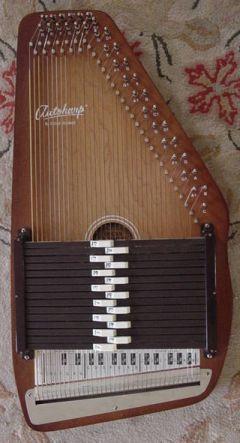
Sara Carter (1898-1979) was the group's lead singer and autoharpist. Sara's deadpan vocal style epitomized the stoicism of the poor whites of the American southeast. Her primary instrument was the autoharp, a chorded zither which has a series of bars attached to dampers. When depressed, the dampers mute all but the desired strings. The autoharp was invented in the late 19th century, either by Charles Zimmerman or by Karl August Gütter (there is dispute over the true origin of the instrument). Whether invented by Zimmerman or Gütter, it was Zimmerman who started manufacturing the instrument in 1885 to great success.
The real John Hardy was an African-American working in the railroad tunnels of West Virginia. He murdered a co-worker during a crap game and was sentenced to hang on January 19, 1894. In his liner notes, Smith reproduces the order of execution:
State of West Virginia vs. John Hardy. Felony. This day came again the State by her attorney and the prisoner who stands convicted of murder in the first degree.... The prisoner saying nothing why such sentence should be passed.... It is therefore considered by the court that the prisoner, John Hardy, is guilty... and that the said John Hardy be hanged by the neck until dead... on Friday the 19th day of January 1894.
Alan Lomax provides the following additional information:
His white captors protected him from a lynch mob that came to take him out of jail and hang him. When the lynch fever subsided, Hardy was tried during the July term of the McDowell County Criminal Court, found guilty and sentenced to be hanged. While awaiting execution in jail, he is said to have composed this ballad, which he later sang on the scaffold. He also confessed his sins to a minister, became very religious, and advised all young men, as he stood beneath the gallows, to shun liquor, gambling and bad company. The order for his execution shows that he was hanged near the courthouse in McDowell County, January 19, 1894. His ballad appears to have been based upon certain formulae stanzas from the Anglo-Saxon ballad stock....
In his notes to the previous track, "Charles Giteau," Smith notes that that song was also allegedly composed by the song's subject.
Whether actually composed by Hardy or not, "John Hardy" became a popular song and has since been performed by numerous artists. It was first recorded in 1924 by Eva Davis. It has since been performed by Pete Seeger, Woody Guthrie, Bob Dylan and the Grateful Dead, Bill Frissell, Petra Haden, Uncle Tupelo, and others.
John Hardy, he was a desperate little man, He carried two guns every day. He shot a man on the West Virginia line, And you ought seen John Hardy getting away.
John Hardy, he got to the Keystone Bridge, He thought that he would be free. And up stepped a man and took him by his arm, Says, "Johnny, walk along with me."
He sent for his poppy and his mommy, too, To come and go his bail. But money won't go a murdering case; They locked John Hardy back in jail.
John Hardy, he had a pretty little girl, That dress that she wore was blue. As she came skipping through the old jail hall, Saying, "Poppy, I've been true to you."
John Hardy, he had another little girl, That dress that she wore was red. She followed John Hardy to his hanging ground, Saying, "Poppy, I would rather be dead."
"I been to the East and I been to the West, I been this wide world around. I been to the river and I been baptized, And now I'm on my hanging ground."
John Hardy walked out on his scaffold high, With his loving little wife by his side. And the last words she heard poor John-O say, "I'll meet you in that sweet bye-and-bye."
This recording marks the first appearance of a female vocalist on the Anthology. It is a magnificent performance. Maybelle's guitar playing is strong and confident, while Sara's vocals are youthful, yet resigned. This song also marks the first of seven recordings by the Carter Family that Smith included in the Anthology, counting the originally unpublished fourth volume; more than any other single artist. This is fitting, as the Carters certainly rank as one of the single most important popular American musicians.
"John Hardy Was A Desperate Little Man" rounds out a rogues gallery of three tracks in a row about notorious badmen (along with "Bandit Cole Younger" and "Charles Giteau").
Revenge of the Shameless Plug Department: Check out the third episode of the "Where Dead Voices Gather" podcast. This week's episode is a special program of holiday music, featuring performances by Bessie Smith, Count Basie, Charles Brown, and Fiddlin' John Carson, as well as Christmas music from Trinidad, the Ukraine and Puerto Rico. Also available on iTunes. Subscribe now so you don't miss a single episode!
You can also become a fan of "Where Dead Voices Gather" on Facebook and follow us on Twitter. Where Dead Voices Gather: Using today's technology to promote yesterday's music!
Here's a short film of Roscoe Holcomb performing "John Hardy."
Here's a wonderful performance by Maybelle and Sara Carter in a 1970s television appearance performing "While The Band Plays Dixie."
Set One: Ballads; Disc One; Track Nine: "Old Shoes and Leggins" performed by Uncle Eck Dunford. "Vocal solo with harmonica, violin, guitar, banjo, autoharp." Recorded in Bristol, TN on October 31, 1928. Original issue Victor V-400608.
Born Alex Dunford in Carroll County, West Virginia in 1878, Uncle Eck Dunford has the distinction of being the first fiddle player to appear on the Anthology. He recorded mainly as a sideman, often with Ernest "Pop" Stoneman, who plays harmonica on this recording (and who appears on the Anthology performing "The Mountaineers Courtship" and "The Spanish Merchant's Daughter"), although he did record occasionally under his own name. It was as a member of Stoneman's Dixie Mountaineers that Dunford recorded at the historic Bristol Sessions in 1927 (a little over a year before "Old Shoes and Leggins" was recorded), where both Jimmie Rodgers and the Carter Family (who will appear on the Anthology performing "John Hardy Was A Desperate Little Man" and several other songs) were first recorded. Dunford was known as a "local character" around Galax, Virgina where he settled, often performing as a member of the Galax based string band, the Bogtrotters. He was reknowned for his vast repository of songs, his unusual tunings, and his eccentric mode of dress (he always appeared in an overcoat and overshoes, even in the heat of summer. In winter, he added pink earmuffs to his ensemble). He died in 1953.
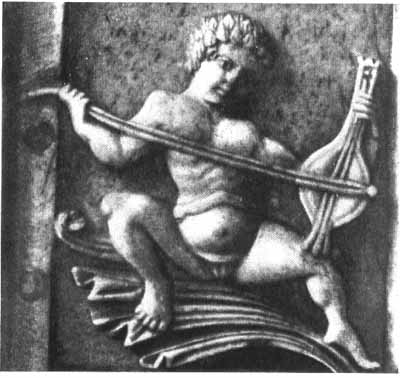
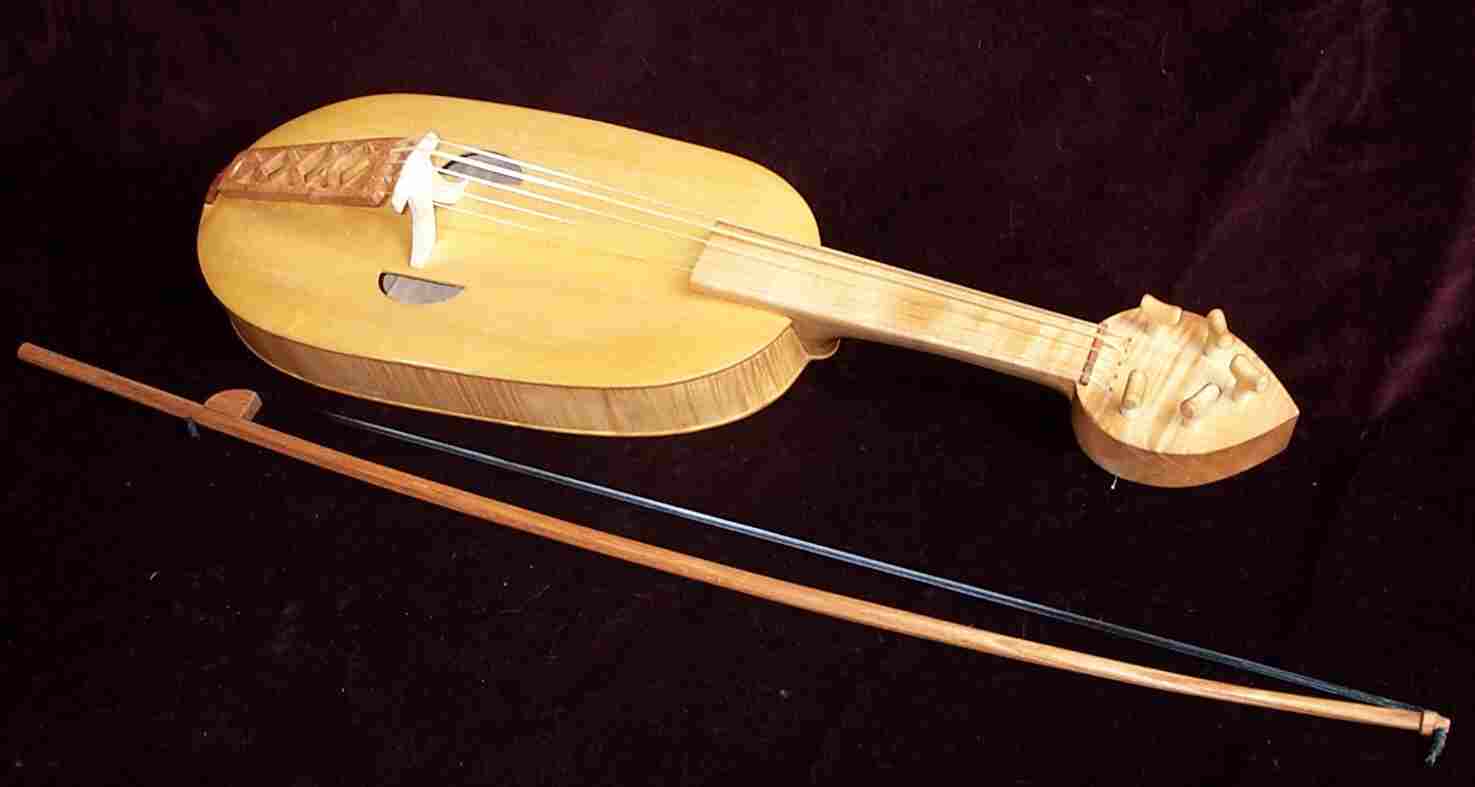
The term "fiddle" can refer to a number of stringed instruments, but in Dunford's case it refers specifically to the violin. The ancestor of all bowed string instruments is usually considered to be the Ravanahatha, an instrument that first appeared in India around 3000 BCE. The technology traveled to China, and then through Central Asia to Europe, where it eventually led to the Byzantine lira. The lira then traveled to Western Europe, leading to the development of the medieval fiddle (the terms lira and fiddle being used interchangeably by 11th and 12th century writers). The medieval fiddle is the ancestor of the modern violin and other members of the violin family.
The violin traveled to the New World with British, French, Dutch, and Spanish settlers and was integrated into the various musical folk traditions. The style of fiddling practiced by Dunford and others in the South-eastern United States derives primarily from British and Irish forms.
There is some disagreement about the precise nature of the personnel on this recording. In Smith's booklet, he reproduces the original label copy, which states that "Old Shoes and Leggins" is a "vocal solo with harmonica, violin, guitar, banjo, autoharp." However, the records kept by the record company, and reproduced in the 1997 reissue of the Anthology, give the personnel as follows: Uncle Eck Dunford, vocal and fiddle; Ernest Stoneman, harmonica; Hattie Stoneman, mandolin; Bolen Frost, banjo." Listening to the song, it does seem that there is a guitar audible. It is possible that Stoneman is playing the guitar with his harmonica in a rack around his neck. If Stoneman's wife, Hattie, is indeed playing the mandolin, it would seem that whoever wrote the copy on the original record label mistook the sound of the mandolin for an autoharp.
"Old Shoes and Leggins" first recorded appearance comes from Scotland in the early 1700s. It remains popular in the British oral tradition, often appearing as "An Old Man Came O'er The Lea" or "With His Grey Beard Newly Shaven." Some observers contend that what Dunford is singing is "with his overshoes on and his leggin's." It is possible. Dunford, who was fifty when the song was recorded, sounds much older, probably due to a lack of teeth. Nevertheless, when I listen to the song, I hear the words "with his old shoes on" rather than "overshoes on." You'll have to listen for yourself and decide.
The song tells the simple story of an old man who comes to court a young woman. His bizarre behavior eventually causes her to reject him.
A man that was old come a-courtin' one day And the girls wouldn't have him; He come down the lane on a walkin' cane, With his old shoes on and his leggin's.
My mother, she told me to give him a chair, For the girls wouldn't have him; I gave him a chair and he looked mighty queer, With his old shoes on and his leggin's.
My mother she told me to hang up his hat, For the girls wouldn't have him. I hung up his hat and he kicked at the cat, With his old shoes on and his leggin's.
My mother she told me to give him some meat, For the girls wouldn't have him. I gave him some meat and oh, how he did eat, With his old shoes on and his leggin's.
My mother she told me to give him the hoe, For the girls wouldn't have him. I gave him the hoe and he jumped Jim Crow, With his old shoes on and his leggin's.
My mother she told me to give him a saw, For the girls wouldn't have him. I gave him a saw and he played "Rye Straw," With his old shoes on and his leggin's.
My mother she told me to put him to bed, For the girls wouldn't have him. I put him to bed and he stood on his head, With his old shoes on and his leggin's.
My mother she told me to send him away For the girls wouldn't have him. I sent him away and he left us to stay With his old shoes on and his leggin's.
Like "The Wagoner's Lad", "Old Shoes and Leggins" is sung from the point of view of a female protagonist. It is paired with "King Kong Kitchie Kitchie Ki-Me-O" as both songs deal with courtship. While the frog in the previous song is accepted, however, the old man in this song is eventually sent away. Another reason this song is interesting is the fact that it makes reference to other popular songs and dances. When given the saw, the old man plays "Rye Straw," a well-known fiddle tune. Similarly, when given the hoe, the old man "jump[s] Jim Crow," a reference to the 1828 song and dance routine popularized by blackface performer Daddy Rice. These references solidly ground this version of the song in the American tradition, distinguishing it from its British ancestry.
One detail in the performance of this song that I particularly enjoy, by the way, is the way Dunford pronounces the word "queer" as "quare" in order to rhyme it with "chair."
"Old Shoes and Leggins" has not been recorded many times over the years, and no video was available as the time of this writing. If I find any, I will post it, however.
Here are a couple of videos I've found that illustrate the songs referenced in "Old Shoes and Leggins." The first is a version of "Rye Straw." This is an excellent example of clawhammer banjo picking played by 17-year-old Josh Turner on a fretless, gut-strung (rather than steel-strung) banjo. There are a few little fluffs, but given the age of the performer, this is a remarkable performance...
The second video is a version of "Jump Jim Crow" performed on five-string banjo by Sule Greg Wilson.
Finally, here's a video of fiddler Barry Hall performing a tune on the vielle, a variation of the medieval fiddle referenced above.
Two from the American Southwest
-
I wanted to focus on two examples of local, almost “one-off” 78 rpm
releases that feature music of the American southwest, in the states of
Arizona and New...
71 “Poor Boy Blues” by Ramblin’ Thomas
-
“Poor Boy Blues” by Ramblin’ Thomas (recorded in Chicago, November 1928)
Poor boy, poor boy. Poor boy long ways from ...
Continue reading
Domain Changes
-
Change is good, you know. And over the past several months, I've spent more
and more time on what was originally meant to stand in as a side-project to
thi...
Dumps.
-
I want to be stripped of all those things that prevent me from fulfilling
my potential and get me to moments like this, where I sit in bed and engage
in a ...