Here's the review I did for the TU on Saturday's FreshGrass show:
If one word were to sum up the FreshGrass Festival at Mass MoCA, it would be eclectic. The music performed crossed and recrossed genre boundaries. Boston’s the Novel Ideas, for example, played raw, electrifying roots rock laced with country harmonies, while the trio Haas Kowan Tice mashed up traditional string band music with chamber strings to great effect.
Read the whole article by clicking the link below:
One of the reasons I haven't been posting here lately, apart from general laziness, is that I have recently made the move into the lucrative (ha) field of freelance writing (largely music, but also features, book and theater reviews, etc.). Anyway, here's a piece I did for Thursday's Times Union on the FreshGrass Music Festival in North Adams, MA, which features an interview with Grammy winning banjo player and all around swell gal, Alison Brown:
The spirit of Appalachia will settle in the Berkshires this weekend when the FreshGrass Music Festival hits Mass MoCA for three days of music, heritage and moonshine.
Before I begin this review, a moment of full disclosure: Chuck Pinnell, guitarist and producer of Dark River is my aunt Suzi's ex-husband and the father of my cousin, René Pinnell (who is a big wheel in the computer world. Look for his apps Hurricane Party and Forecast. Yes, I know...I know. My family is disgustingly accomplished. One day maybe I'll join them. Sigh...). What is the point? The point is twofold: One, yes I was asked by Chuck to check out this CD and was sent a review copy. Two, my relationship to Chuck and Suzi has absolutely no bearing on my opinion of the music. If I think it sucks, I will say so. As it happens, I don't think it sucks... Nevertheless, I can easily see how one might question my objectivity in this review and think that I'm just using my blog to shill for family, however much I might protest that this isn't the case. Having said all of that, let's get to the music...
Dark River: Songs of the Civil War Era was conceived by producer Chuck Pinell, an Austin based guitarist and composer. According to his liner notes, Chuck came up with the idea for Dark River while working with fellow musician Slaid Cleaves on a film project. Chuck recruited a number of extraordinarily talented musicians to provide interpretations of songs ranging from Stephan Foster's "Hard Times" to the Irish ballad "Johnny Has Gone For A Soldier." The result is an eclectic slice of Americana; bracing as a double shot of bourbon and refreshing as a drink from a cool mountain spring.
The album kicks off, appropriately, with a rollicking version of "Shiloh" or "The Secesh". The alternate title takes its name from the secessionists of central Tennessee who lined up to fight for the Confederacy following the 1862 Battle of Shiloh. The battle was one of the bloodiest of the war: 10,700 Confederates were killed or wounded for no gain whatsoever, while the Union squeaked out a narrow victory at a cost of 13,000 killed or wounded.
"Shiloh" is performed here by fiddler Warren Hood and mandolinist Rich Brotherton. Hood's youthful voice perfectly matches that of the speaker, a brash young man bravely striding into battle following one of the Confederacy's heaviest losses. Instrumentally, the performance is pitch perfect and beautifully recorded. It is an auspicious beginning.
The rest of the album does not disappoint. Each track is unique, providing an original take on some very familiar melodies and featuring magnificent performances. The fact that several musicians show up throughout the album providing instrumental support keeps the album from feeling like a patchwork affair, a hazard of multiple-artist projects. Some highlights:
Drew Nelson's weary reading of "Hard Times", featuring a lovely harmony vocal from Tina Mitchell Wilkins; Rebecca Folsom and Celeste Krenz's angelic performance of the spiritual "Swing Low" (a song I've had particular affection for ever since my mother sang it to me as a lullaby when I was little); two lovely Irish songs performed back to back (in memory of the many Irish lads who were recruited into the Union army, some directly off the boat): Slaid Cleaves gives us a haunting and haunted rendition of "She Moved Through The Fair" while Erin Ivey keens a heartrending lament for her lost love on "Johnny Has Gone For a Soldier", an American version of the traditional "Siúil a Rúin" (with the chorus beautifully sung in Gaelic).
The album features some wonderful instrumentals that really highlight the tightness of this group of musicians: Producer Pinnell's fine reading of "The Last Rose of Summer," Rich Brotherton's version of "The Yellow Rose of Texas" and Jeff Plankenhorn, whose lovely dobro enlivens his version of "Home Sweet Home" (a song which also appeared on the Anthology).
I would be remiss if I did not mention my own dear aunt, Suzi Stern. It was Suzi who hipped Chuck to Where Dead Voices Gather and suggested that he might contact me for a review. Suzi is also the artist on Dark River with whom I am most familiar (we lived in the same house for the first several years of my life, for cryin' out loud). So I may, again, sound biased when I say that Suzi's contribution to Dark River is a stand-out. Suzi performs a version of the minstrel show standard "Oh! Susanna" that makes the hair on your arms stand on end. While most of artists on Dark River are solidly within the bounds of folk, country, and traditional music, Suzi is a jazz musician. Her arrangement of "Oh! Susanna", which features her piano playing as well as her vocal, perfectly blends modern jazz with American Folk Music (and there is an argument to be made that jazz is as much a "folk" music as blues, but that's another post). Leah Zeger's fiddle provides a gentle counterpoint to the rubato piano line laid down by Suzi, while Chuck plunks a mean banjo, in addition to his contribution as a guitarist. Suzi holds off on the familiar "don't you cry for me" chorus, creating a tension that builds throughout the performance. It is, truly, a highlight on an album of highlights.
I don't mean to slight any of the other performances from artists like Jimmy LaFave, Jon Dee Graham, Eliza Gilkyson, James McMurtry, and Rita Hosking, all of whom are wonderful and enliven their contributions with their own unique styles. There's just too much great music to go into detail about each track. I heartily recommend Dark River: Songs of the Civil War Era to all lovers of American music, past and present.
Here's a video of Warren Hood and Rich Brotherton performing "Shiloh":
I would like to take this opportunity to thank Chuck for his patience. He sent me a copy of Dark River many months ago (over the summer, in fact). I like to live with an album for a while, and listen to it interspersed with other albums, before I attempt to review it. This is probably the reason I will never be a professional music critic, but I think it allows me to do justice to the music. Thanks to Chuck and to all of the artists who made this wonderful album possible...
Dark River is available on Amazon.com, CDuniverse, iTunes, and fine internet music retailers everywhere.
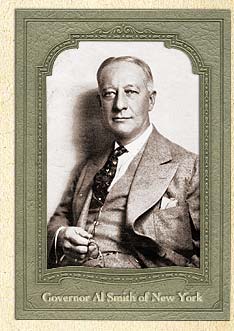
Alfred Emmanuel Smith (December 30, 1873-October 4, 1944) was the four-time Governor of the State of New York who ran unsuccessfully for President of the United States in 1928. His opponent was Herbert Hoover, who had served as Secretary of Commerce in the Calvin Coolidge administration. In 1928, the United States was experiencing an unprecedented economic boom, for which the administrations of Coolidge and Harding had taken credit. This unprecedented boom was to end with the Stock Market Crash of 1929, which would lead to an equally unprecedented economic crisis. The nation's prosperity in 1928, coupled with anti-Catholic sentiments aimed at Smith, ensured that Hoover would defeat Smith in the general election. One of the planks in Smith's platform was the repeal of prohibition. Smith was succeeded as Governor of New York by future President Franklin Delano Roosevelt.
"Governor Al Smith" is a direct endorsement of Smith by Uncle Dave Macon, a remarkable thing considering that Smith was both a northerner and a Catholic. Gettin' right now.
Al Smith nominated for president, darlin'. Al Smith nominated for president, darlin'. Al Smith nominated for president, My vote to him I'm a-gonna present, darlin'.
Al Smith is a mighty fine man, darlin'. Al Smith is a mighty fine man, darlin'. Al Smith is a mighty fine man, He wants to be president of our land, darlin'.
Hot dog! In Chicago, just from Tennessee, and here's what the people say:
Al Smith is a-gettin' on a boom, darlin'. Al Smith is a-gettin' on a boom, darlin'. Al Smith is a-gettin' on a boom, darlin.' Al Smith is a-gettin' on a boom. He don't favor the open saloon, darlin'.
Smith wants everything to be just right, darlin'. Smith wants everything to be just right, darlin'. Smith wants everything to be just right. The law's gonna get you if you get tight, darlin'.
I'm gonna buy my little camphor gum, darlin'. I'm gonna buy my little camphor gum, darlin'. I'm gonna buy my little camphor gum, For then I think I can buy a little rum, darlin'.
Moonshine's been here long enough, darlin'. Moonshine's been here long enough, darlin'. Moonshine's been here long enough, Let's all vote right and get a-rid of this stuff, darlin'.
Many a good man's been poisoned to death, darlin'. Many a good man's been poisoned to death, darlin.' Many a good man's been poisoned to death, And a-with real drink was never blessed, darlin'.
There's a-four dollar bills and a bottle of beer, darlin'. Four dollar bills and a bottle of beer, darlin'. Four dollar bills and a bottle of beer, Wish to the lord my honey was here, darlin'.
Macon's performance of "Governor Al Smith," which likely recycles the melody of an old folk tune, is more subdued than the other tracks of his that have appeared on the Anthology. Even his characteristic opening remark seems relatively understated. As for Macon's endorsement of Smith, he seems primarily interested in Smith's desire to overturn prohibition. Six of the eight verses deal with alcohol. It is clear that, more than anything else, Macon wants a drink.
Is it too much to suppose that Harry Smith chose to include this track, in part, because it concerns a namesake of his?
"Governor Al Smith," which once again features the guitar of Sam McGee, is the type of song that Harry Smith would never have used on the original three-volume Anthology. While many of the songs on the original three volumes could be described as "topical," none of them describe a current event. Although things like the sinking of the Titanic or the assassination of William McKinley were relatively recent history to the artists on the Anthology - many of these events happening within the artist's lifetime - the two Uncle Dave Macon tracks presented on "Volume Four" represent something completely different. The previous selection, "The Wreck of the Tennessee Gravy Train," commented on a current event. But "Governor Al Smith" goes that track one further: It actually attempts to influence the outcome of a future event. That it was unsuccessful is unimportant. What is important is that the difference of these tracks further underlines the distinction of "Volume Four" from the first three volumes of the set. Once again, the music of "Volume Four" concerns itself with the present and future rather than the past.
Macon would refer to Al Smith's defeat in a later song titled "Nashville."
"Governor Al Smith" is the third of three topical songs in a row and the second of two songs by Uncle Dave Macon (as on the third volume, Uncle Dave's songs are sequenced back to back). It is also the second of four songs in a row that feature artists from the original three-volume Anthology.
The Shameless Plug Department: You can still become a fan of "Where Dead Voices Gather" on Facebook, however, and follow us on Twitter. Where Dead Voices Gather: Using today's technology to promote yesterday's music!
Remember that I still host "Doin' The Thing," a weekly jazz program on KRML 1410 AM and 94.7 FM in Carmel, California. The show airs from 8 PM to 10PM (Pacific Time) on Sunday nights. You can also listen online by visiting the KRML website at 8 PM Pacific, 11 PM Eastern Time. Please tune in and give me feedback!
Here's some footage of Al Smith commenting on the repeal of the 18th Amendment in 1933.
Set Four: The "Lost" Volume; Disc Two; Track Five: "Wreck of the Tennessee Gravy Train?" performed by Uncle Dave Macon. Recorded in Jackson, Mississippi on December 17, 1930. Original issue Okeh 45507.
"Wreck of the Tennessee Gravy Train" is a topical song referring to a banking and financial scandal that embroiled the state of Tennessee during the early years of the Depression. Dick Spottswood (who wrote the notes to Volume Four) summarizes the situation thus:
Charles Wolfe told me that when Tennessee governor Austin Peay died in office in 1927, his replacement was Henry Horton who, with good intentions, sold bonds to complete school & road projects. He trusted one Henry Lea, who instituted a corrupt patronage system, putting state money in banks & trusts controlled by Rogers Caldwell in Nashville. One of his enterprises was Kyrock Construction Co. It received road contracts without bidding for them and this became an issue in the 1930 gubernatorial election. Horton won, but the stock market crashed shortly thereafter, taking down the Bank of Tennessee, with $3.5 million in state funds raised from bonds. Tennessee ultimately was $6 million in debt. Horton was impeached, but the House supported him 58-41, leavng him in office. (As related to Rick Lee)
Macon is joined on this track by his usual accompanist, Sam McGee, who plays the banjo-guitar. The banjo-guitar is a six string banjo with the neck of a guitar. It is also sometimes known as the guitar banjo, guitjo, banjitar or ganjo. I have not been able to find any specific history of the banjo-guitar, but it was popular in the 1920s, suggesting that it probably evolved during the previous decade or so. The guitar-banjo was the instrument of Johnny St. Cyr, and has also been played by such musicians as Django Reinhardt, Papa Charley Jackson, the Reverend Gary Davis, Doc Watson, Taj Mahal, Rod Stewart, David Hidalgo, Joe Satriani, and Keith Urban.
The people of Tennessee want to know who wrecked our gravy train. The one we thought was run so well and now who can we blame? They want to know who greased the track and start them down the road? This same ol' train contained our money to build our highway roads.
But now we're up against it and no use to raise a row. But of all the times I've ever seen, we're sure up against it now. The only thing that we can do is to do the best we can. Follow me, good people, I'm bound for the promised land.
Now, I could be a banker without the least excuse. But look at the treasurer of Tennessee and tell me what's the use? We lately bonded Tennessee for just five million bucks. The bonds were issued and the money tied up and now we're in tough luck.
But now we're up against it and no use to raise a row. But of all the times I've ever seen, we're sure up against it now. The only thing that we can do is to do the best we can. Follow me, good people, I'm bound for the promised land.
Some lay it all on parties, some lay it on others you see. But now that you can plainly see what happened to Tennessee. For the engineer pulled the throttle, conductor rang the bell, The brakeman hollered 'all aboard' and the banks all went to hell.
But now we're up against it and no use to raise a row. But of all the times I've ever seen, we're sure up against it now. The only thing that we can do is to do the best we can. Follow me, good people, I'm bound for the promised land.
Another spirited social commentary by Uncle Dave, who keeps the mood light despite the grim subject matter. Uncle Dave ends the chorus with the promise of better things to come (he is "bound for the promised land"). Nevertheless, Uncle Dave uncharacteristically utters the word "hell" instead of substituting another word (such as "hallelujah," as he does in "Buddy Won't You Roll Down The Line"), indicating just how serious this situation is.
"Wreck of the Tennessee Gravy Train" is the second of three topical songs in a row and the first of two songs by Uncle Dave Macon (as on the third volume, Uncle Dave's songs are sequenced back to back).
As with the previous song, "Wreck of the Tennessee Gravy Train" seems to eerily mirror current events, although it merely goes to show that there is truly nothing new under the sun...
The Shameless Plug Department: You can still become a fan of "Where Dead Voices Gather" on Facebook, however, and follow us on Twitter. Where Dead Voices Gather: Using today's technology to promote yesterday's music!
Remember that I still host "Doin' The Thing," a weekly jazz program on KRML 1410 AM and 94.7 FM in Carmel, California. The show airs from 8 PM to 10PM (Pacific Time) on Sunday nights. You can also listen online by visiting the KRML website at 8 PM Pacific, 11 PM Eastern Time. Please tune in and give me feedback!
Here's broonkind performing a version of "Wreck of the Tennessee Gravy Train."
Set Four: The "Lost" Volume; Disc One; Track Six: "John Henry Was A Little Boy" performed by J.E. Mainer's Mountaineers. Recorded in Charlotte, North Carolina on June 15, 1936. Original issue Bluebird 6629.
Joseph Emmett Mainer was born near Weaverville, North Carolina on July 20, 1898. His younger brother, Wade Mainer, was born on April 21, 1907.
The Mainer brothers came from a musical family and both learned music at an early age. J.E. Mainer learned banjo and fiddle, while Wade concentrated on the banjo. The Mainer Brothers played local dances. Both of them relocated to Concord, North Carolina during the early 1920s where they worked in textile mills. The brothers continued to play locally, their reputations steadily growing. In 1933, J.E. secured a gig playing on radio station WBT in Charlotte, North Carolina, performing on a show sponsored by Crazy Water Crystals. J.E. dubbed his band "J.E. Mainer and his Crazy Mountaineers." In 1934, Wade joined the band on banjo. The group was filled out by guitarist Zeke Morris and "Daddy" John Love. They made their recording debut for Bluebird records in 1935. In 1936, Wade and Zeke Morris temporarily left the group to perform as a duo, but returned in time for the recording session that yielded this version of "John Henry Was A Little Boy" under the name J.E. Mainer's Mountaineers.
In 1937, Wade left the Mountaineers to form his own group, the Sons of the Mountaineers. J.E. kept his group going with various changes in personnel until the start of World War II, when the band broke up. J.E. performed and recorded during the post-war era with his sons, Glenn and Curly. He died on June 12, 1971.
Wade Mainer disbanded the Sons of the Mountaineers during World War II, reforming the group for a 1942 performance at the White House for Franklin and Eleanor Roosevelt. After the war, Mainer continued to perform until his renewed commitment to Christianity led to his retirement from music in 1953.
Mainer relocated to Flint, Michigan where he worked in a General Motors plant. Although he had renounced the music business and quit playing the banjo, Mainer continued to sing gospel music at church and at revival meetings. During the 1960s, Mainer took up the banjo again to record religious music and to tour with his wife, who joined him on stage.
In 1987, Wade Mainer was honored by President Ronald Reagan who bestowed a National Heritage Fellowship upon him. Mainer was honored again in 1996 when he received the Michigan Heritage Award and the Michigan Country Music Association and Services' Lifetime Achievement Award. In 1998, Mainer and his wife were inducted into the Michigan Country Music Hall of Fame. That same year, Mainer was honored with North Carolina’s Surry Arts Council Lifetime Achievement Award.
Mainer still lives in Flint, Michigan. He celebrated his 100th birthday on April 27, 2007 and performed at a concert given in honor of his 101st birthday in 2008. Mainer is the only artist featured on the Anthology who is still alive at the time of this writing.
"John Henry Was A Little Boy" is a variation of the John Henry Ballad. Smith included the Williamson Brothers and Curry's version of "Gonna Die With My Hammer In My Hand" on the second disc of the "Ballad" set. For more information on the historical John Henry and on the John Henry ballad in general, see that earlier entry.
John Henry was a little boy. Lord, he sat on his papa's knee. Lord, he picked up a hammer and a little piece of steel, Said, "This hammer be the death of me. This hammer be the death of me."
John Henry told his captain, Says, "I am a Tennessee man. But before I let that steam drill beat me down, Lord, I'll die with my hammer in my hand. I'll die with my hammer in my hand."
C'mon, Johnny!
John Henry told his shaker, Says, "Shaker, you'd better pray. Lord, if I miss this six foot steel, Tomorrow be your buryin' day. (Be careful.) Tomorrow be your buryin' day."
John Henry walked to the tunnel, With his captain by his side. The rock was so tall, John Henry so small, Lord, he laid down his hammer and cried. He laid down his hammer and he cried.
John Henry had a lovely little woman. Name was Polly Ann. John Henry got sick and he had to go home. Lord, Polly drove his steel like a man. Polly drove his steel like a man.
Some woman, boy...
J.E. Mainer's Mountaineers, on this recording, consisted of J.E. Mainer on fiddle, Wade Mainer on lead vocal and banjo, Zeke Morris and Beachum Blackweller on guitars and vocals.
It is most interesting to compare the Mainer Brothers' version of this song with the earlier recording by the Williamson Brothers. Both recordings are wild, performed at breakneck speed. Both recordings feature fiddle and two guitars (although the Mainer Brothers' version also features the banjo). Many of the same lyrics crop up in both recordings (although there are some variations. In the Williamson Brothers' version, John Henry's wife is named "Sally Ann." In the version by the Mainer Brothers, her name is "Polly Ann." Such variations between versions is to be expected, and is indeed an integral part of the Folk Process). While both versions purport to be ballads, neither version actually gets around to describing the race between John Henry and the Steam Drill (although the Mainers get a little closer,) and while both version have John Henry declaring that his hammer "will be the death of" him, and that he will "die with [his] hammer in [his] hands," neither version actually depicts his death.
The main differences between the two recordings (made roughly ten years apart) is stylistic. The Williamson Brothers' version points to the past; to traditional folkways. The Mainer Brothers' version points to the future. Both Mainer brothers, but especially Wade, are viewed as a bridge between the "Old Time" styles of the past, and the Bluegrass style that was to come.
"John Henry Was A Little Boy" is the third song in a row recorded in Charlotte, North Carolina, and was actually recorded the day before the Blue Sky Boys recorded their version of "Down On The Banks of the Ohio."
The Shameless Plug Department: If you've tried to listen to the Podcast lately, you have no doubt noticed that the links are dead. The reason for this is that my account has been suspended for taking too long to put up a new episode. It is with a heavy heart that I declare the Where Dead Voices Gather Podcast to be on permanent hiatus. There's just too much going on in my life to keep it up. Perhaps the Podcast will return one day.
You can still become a fan of "Where Dead Voices Gather" on Facebook, however, and follow us on Twitter. Where Dead Voices Gather: Using today's technology to promote yesterday's music!
Remember that I still host "Doin' The Thing," a weekly jazz program on KRML 1410 AM and 94.7 FM in Carmel, California. The show airs from 8 PM to 10PM (Pacific Time) on Sunday nights. You can also listen online by visiting the KRML website at 8 PM Pacific, 11 PM Eastern Time. Please tune in and give me feedback!
Here's a kick-ass blues version of John Henry's story by Mississippi Fred McDowell. Lordy!
Set Three: Songs; Disc Two; Track Twelve: "Train On The Island" performed by J.P. Nestor. "Vocal solo with violin and banjo." Recorded in Bristol, Tennessee on August 1, 1927. Original issue Victor 21070A.
J. Preston Nestor was born in Hillsville, Virginia in 1876. His exact birthdate is unknown as are the details of his early life. What is known is that Nestor, along with fiddler Norman Edmonds, recorded four songs during the legendary Bristol Sessions, including this version of "Train On The Island." Although Nestor was approached about a follow-up session in New York, Nestor declined the offer and never recorded again. He died in 1967 at the age of 91.
Norman Edmonds was born in Wythe County, Virginia on February 9, 1889. He learned the fiddle from his father, which he played in the rural style (with the fiddle held against his chest rather than under his chin). Edmonds was known for his vast repository of songs, many of which have seldom been heard outside of Galax, Virgina. Edmonds recorded under his own name (his version of "Breaking Up Christmas" is available on the excellent Dust-To-Digital holiday collection, Where Will You Be Christmas Day) and remained active through the 1970s. He died in 1976.
"Train On The Island" is the last of five work songs in a row and the second song in a row to feature a train.
Train on the island, since I heard it squeal, Go tell my true love, I can't hold the wheel. I can't roll the wheel, Lord, it's I can't hold the wheel.
Thought he heard it blow, Lord, he thought he heard it blow.
Train on the island, since I heard it blow, Go tell my true love, sick and I can't go. Sick, and I can't go.
And I can't roll the wheel.
Train on the island, since I've heard it squeal, Go tell my true love, how happy I do feel. Thought he heard it blow, Lord, thought he heard it blow.
Train on the island, since I've heard it blow, Go tell my true love, long as I can go. Long as I can go.
Lord, he thought he heard it blow.
Train on the island, since I've heard it blow, Go tell my true love, sick and I can't go. Sick, and I can't go, Lord, sick and I can't go.
Thought he heard it blow, Lord, thought he heard it blow.
"Train On The Island" features some truly remarkable fiddle and banjo playing. Nestor and Edmonds simulate the sounds of the train on their instruments. Although Smith describes Nestor's vocal as "meager," I disagree. I think his voice perfectly fits the rushed mood of the piece. The words tumble forth in a way that suggests that Nestor was barely aware of them at the time. Lines are started and only half finished, or else finished without being started. Pronouns are dropped, as though Nestor doesn't have time to pronounce every word. The song gives a palpable impression of time running out. No matter how fast Edmonds plays and Nestor sings, it will be too late. It has always been too late.
The song is provides a wonderful contrast for the laid back "K.C. Moan."
The Shameless Plug Department: The sixth episode of the "Where Dead Voices Gather" podcast is finally up! It's an all fiddle episode featuring fiddle tunes from both black and white artists, as well as three tracks from the Middle East! Also available on iTunes! Subscribe today so you don't miss a single episode. It's free and it doesn't hurt. Who can ask for more?
You can also become a fan of "Where Dead Voices Gather" on Facebook and follow us on Twitter. Where Dead Voices Gather: Using today's technology to promote yesterday's music!
Remember that I host "Doin' The Thing," a weekly jazz program on KRML 1410 AM and 94.7 FM in Carmel, California. The show airs from 8 PM to 10PM (Pacific Time) on Sunday nights. You can also listen online by visiting the KRML website at 8 PM Pacific, 11 PM Eastern Time. Please tune in and give me feedback!
Here's a video of gadaya performing "Train On The Island" on banjo.
Set Three: Songs; Disc Two; Track Nine: "Buddy Won't You Roll Down The Line" performed by Uncle Dave Macon. "Vocal solo and banjo - guitar by Sam McGee." Recorded in Chicago on July 25, 1928. Original issue Brunswick 292.
According to Smith's notes, "Buddy Won't You Roll Down The Line," along with the previous selection, "Way Down The Old Plank Road," and the three songs that follow, are classified as "work songs" because "they are structurally adapted to responsive chanting by gang workers." Smith notes that "the performances in the present set have been given accompaniments and somewhat 'refined', but the characteristic leader and chorus pattern survives."
Way back yonder in Tennessee, they leased the convicts out. They worked 'em in the coal mines against free labor stout; Free labor rebelled against it. To win it took some time. But while the lease was in effect, they made 'em rise and shine.
Oh, buddy, won't you roll down the line? Buddy, won't you roll down the line? Yonder come my darlin', comin' down the line. Buddy, won't you roll down the line? Buddy, won't you roll down the line? Yonder come my darlin', comin' down the line.
Every Monday morning they've got 'em out on time. March 'em down to Lone Rock, said to look into that mine. March you down to Lone Rock, said to look into that hole Very last word the captain say, "You better get your coal."
Oh, buddy, won't you roll down the line? Buddy, won't you roll down the line? Yonder come my darlin', comin' down the line. Buddy, won't you roll down the line? Buddy, won't you roll down the line? Yonder come my darlin', comin' down the line.
The beans they are half done, the bread is not so well. The meat it is as burnt up and the coffee's black as heck. But when you get your task done, you'll gladly come to call. Anything you'd get to eat it taste good, done or raw.
Oh, buddy, won't you roll down the line? Buddy, won't you roll down the line? Yonder come my darlin', comin' down the line. Buddy, won't you roll down the line? Buddy, won't you roll down the line? Yonder come my darlin', comin' down the line.
The bank boss is a hard man, a man you all know well. And if you don't get your task done, he's gonna give you hallelujah! Carry you to the stockade, and it's on the floor you'll fall. Very next time they call on you, you bet you'll have your coal.
Oh, buddy, won't you roll down the line? Buddy, won't you roll down the line? Yonder come my darlin', comin' down the line. Buddy, won't you roll down the line Buddy, won't you roll down the line? Yonder come my darlin', comin' down the line.
The first verse of "Buddy Won't You Roll Down The Line" makes direct reference to the Coal Creek Rebellion of 1891. Beginning in the mid-19th century, it was common practice in the state of Tennessee to lease convicts to private companies as cheap labor, allowing the companies to pay for the care and feeding of the convicts. According to the Tennessee Encyclopedia of History and Culture,
On July 14, 1891, miners launched a series of guerrilla attacks at Briceville in Anderson County. In the initial confrontation, three hundred miners surrounded the stockade, took charge of the forty prisoners, marched them and their guards five miles to Coal Creek (now Lake City), sealed them in boxcars, and shipped them to Knoxville. The miners requested the intervention of Governor John P. Buchanan to protect the rights of labor. Buchanan agreed to meet with the miners, but ordered three companies of state militia to restore order and return the convicts to Briceville. In his meeting with the miners, Buchanan advised them to seek justice through the courts. When the miners repeated their action on July 20, Buchanan agreed to call a special session of the legislature to consider the issue of convict leasing.
It wasn't until 1893 that the Tennessee legislature agreed to construct a new prison and put an end to the practice of convict leasing, once the lease expired in 1896.
The rest of the song is a description of convict life as the men are forced to work in the mines and submit to brutal discipline.
As on the previous selection, Macon plays a spirited banjo part and is joined by Sam McGee on guitar. McGee also sings on the choruses. Macon was fond of including both historic and topical references in his songs.
There are two references in the song to getting one's "pole," which I imagine is something commonly used in coal mining, although I haven't been able to find any confirmation of that.
One amusing detail in this song is Macon's reluctance to use the word "hell" in a song. In two verses, he sets up rhymes that lead the listener to believe that Macon is going to end the line with the word "hell," but Macon quickly (and humorously) substitutes another word ("heck" in one verse and "hallelujah" in another). This reminds me of a "play song" I heard in elementary school where swear words are substituted with innocuous sound-alike words. The only words I can remember are
...you son of a Beech Nut chewing gum, five cents a pack. If you do not like it, then shove it up your Ask me no more questions, I'll tell you no more lies.
If anyone remembers this song or chant, or any variations thereon, please leave a comment below.
The Shameless Plug Department: The sixth episode of the "Where Dead Voices Gather" podcast is finally up! It's an all fiddle episode featuring fiddle tunes from both black and white artists, as well as three tracks from the Middle East! Also available on iTunes! Subscribe today so you don't miss a single episode. It's free and it doesn't hurt. Who can ask for more?
You can also become a fan of "Where Dead Voices Gather" on Facebook and follow us on Twitter. Where Dead Voices Gather: Using today's technology to promote yesterday's music!
Remember that I host "Doin' The Thing," a weekly jazz program on KRML 1410 AM and 94.7 FM in Carmel, California. The show airs from 8 PM to 10PM (Pacific Time) on Sunday nights. You can also listen online by visiting the KRML website at 8 PM Pacific, 11 PM Eastern Time. Please tune in and give me feedback!
Here's a video of guitarist Jody Stecher performing a version of "Buddy Won't You Roll Down The Line." He also teaches you how to play the song yourself!
Set Three: Songs; Disc Two; Track Eight: "Way Down The Old Plank Road" performed by Uncle Dave Macon. "Vocal solo and banjo with guitar by Sam McGee." Recorded in New York on April 14, 1926. Original issue Vocalion B15321 (53).
David Harrison Macon, better known as Uncle Dave Macon or The Dixie Dewdrop, was born on October 7, 1870 in Smartt Station, Tennessee to Confederate Captain John Macon and Marsha Ramsey. In 1884, the family relocated to Nashville, Tennessee where Macon's parents ran the Old Broadway Hotel, a frequent stop for vaudeville and circus performers. In 1885, Macon learned to play the banjo from a circus comedian named Joel Davidson. In 1886, Macon's father was murdered outside the hotel. Macon's mother sold the hotel and moved the family to Readyville, Tennessee where she ran a stagecoach stop. Macon entertained passengers with his banjo on a home-made stage.
Macon married in 1889 and settled on a farm near Kittrell, Tennessee where he raised his family, which came to include six sons. Around 1900, Macon started his own business, a freight company called The Macon Midway Mule and Wagon Transportation Company which ran between Murfreesboro and Woodbury, Tennessee. Macon often sang and played banjo at stops along the way. In time, his sons joined the business, but competition from automobiles forced Macon to close down his business in 1920.
Macon began his professional musical career in 1921 when he played a local Methodist church benefit show. He was discovered by Marcus Loew in 1923 while performing for a group of Shriners in Nashville. Loew hired Macon to perform at a Loew's Theater in Alabama, which quickly lead to more bookings. At the age of 50, Macon embarked on a career as a touring entertainer.
On July 8, 1924, Macon cut his first records for Vocalion. The records proved popular, and Macon recorded prolifically into the late '30s. He also made recordings for Okeh and Bluebird. In 1925, Macon met guitarist Sam McGee who would become Macon's performing partner, and was also a member (along with brother Kirk McGee and Mazy Todd) of Macon's band The Fruit Jar Drinkers.
On December 26, 1925, Macon made his debut on the recently formed WSM radio station, soon to be home of the Grand Ole Oprey. Macon remained a regular presence on WSM and frequent guest on the Grand Ole Oprey for the next twenty-six years. In 1940, Macon appeared in the Republic Pictures film The Grand Ole Oprey, along with Oprey founder George D. Hay, Roy Acuff, and Macon's son Dorris, who was acting as Macon's accompanist at the time. The late 1940s found Macon touring with Bill Monroe and Earl Scruggs, although Macon was not personally impressed with the new Bluegrass style.
Macon continued to perform regularly until March 1, 1952, when his health began to fail. He died on March 22, 1952 in Murfreesboro. He was inducted into the Country Music Hall of Fame in 1966 and his son, Dorris, along with Sam and Kirk McGee, continued to appear on the Grand Ole Oprey was the Fruit Jar Drinkers until the early '80s. A monument has been erected to Macon's memory, and Murfreesboro, Tennessee hosts "Uncle Dave Macon Days" each year, featuring contests of clogging, buck dancing, fiddling, singing, and banjo picking.
Macon is one of the oldest performers to be featured on the Anthology and is often cited as the link between old time folk and vaudeville music and modern country music.
"Way Down The Old Plank Road" is a song about life on a chain gang.
Hot dog, buddy let's go!
Rather be in Richmond in all the hail and rain, Then for to be in Georgia, boys, wearing that ball and chain.
Won't get drunk no more, Won't get drunk no more, Won't get drunk no more, Way down the old plank road.
Whoooo!
I went down to Mobile for to get on the gravel train. Very next thing they heard of me, had on a ball and chain.
Won't get drunk no more, Won't get drunk no more, Won't get drunk no more, Way down the old plank road.
Whoooooo!
Doney, oh dear Doney, what makes you treat me so? Caused me to wear the ball and chain and now my ankles sore.
Won't get drunk no more, Won't get drunk no more, Won't get drunk no more, Way down the old plank road.
Glory hallelujah, there!
Knoxville is a pretty place, Memphis is a beauty, If you want to see them pretty girls, hop to Chattanoogie.
Won't get drunk no more, Won't get drunk no more, Won't get drunk no more, Way down the old plank road.
Glory hallelujah, there! Fare you well, I'm gone!
I'm going to build me a scaffold on the mountain high, So I can see my Nora (?) girl as she goes riding by.
Won't get drunk no more, Won't get drunk no more, Won't get drunk no more, Way down the old plank road.
Whooo!
My wife died a Friday night, Saturday she was buried, Sunday was my courting day, Monday I got married.
Won't get drunk no more, Won't get drunk no more, Won't get drunk no more, Way down the old plank road.
Kill yourself!
Eighteen pounds of meat a week, whiskey here to sell. How can a young man stay at home, pretty girls look so well?
Won't get drunk no more, Won't get drunk no more, Won't get drunk no more, Way down the old plank road.
Whooooo! Fare you well!
"Way Down The Old Plank Road" is a perfect introduction to the force of nature that was Uncle Dave Macon. Although in his 50s when he began his career as a professional performer, Macon performs with the verve and energy of a man half his age. Characteristic of Macon's style, along with his exuberant banjo picking, were shouts, asides and stomping feet. Indeed, Macon stands out as by far the greatest showman on the Anthology.
"Way Down The Old Plank Road" tells no story and only alludes to the chain gang (with references to "wearing the ball and chain") rather than being an explicit prisoner's lament (unlike several of the tracks which appeared earlier on this disc). Instead, Macon alternates references to the chain gang with unrelated floating verses. The fifth verse contains a similar lyric to that which opens Clarence Ashley's recording of "The Coo Coo Bird."
One of the best moments in this recording is Macon's cry of "Kill yourself!" following the humorous verse about the speaker's widowhood and rapid remarriage.
This is the first of two Uncle Dave Macon recordings in a row. Two more Uncle Dave Macon recordings appear on the "lost" fourth volume of the Anthology.
The Shameless Plug Department: The sixth episode of the "Where Dead Voices Gather" podcast is finally up! It's an all fiddle episode featuring fiddle tunes from both black and white artists, as well as three tracks from the Middle East! Also available on iTunes! Subscribe today so you don't miss a single episode. It's free and it doesn't hurt. Who can ask for more?
You can also become a fan of "Where Dead Voices Gather" on Facebook and follow us on Twitter. Where Dead Voices Gather: Using today's technology to promote yesterday's music!
Remember that I host "Doin' The Thing," a weekly jazz program on KRML 1410 AM and 94.7 FM in Carmel, California. The show airs from 8 PM to 10PM (Pacific Time) on Sunday nights. You can also listen online by visiting the KRML website at 8 PM Pacific, 11 PM Eastern Time. Please tune in and give me feedback!
Here's the Lost Mountain String Band performing a version of "Way Down The Old Plank Road."
Set Three: Songs; Disc Two; Track Three: "Country Blues" performed by "Dock" Boggs. "Vocal solo with banjo." Recorded in New York on March 9, 1927. Original issue Brunswick 131A (96).
For biographical information on Dock Boggs, see the entry for "Sugar Baby."
Come all you good time people, While I've got money to spend, Tomorrow might be Monday And I'll neither have a dollar nor a friend.
When I had plenty of money, good people, My friends were all standing around, Just as soon as my pocket book was empty, Not a friend on earth to be found.
Last time I seen my little woman, good people, She had a wine glass in her hand; She was drinking down her troubles With a low-down sorry man.
Oh, my daddy taught me a-plenty, good people; My mama, she taught me more. If I didn't quit my rowdy ways, Have trouble at my door.
I wrote my woman a letter, good people; I told her I's in jail. She wrote me back an answer Saying "Honey, I'm a-coming to go your bail."
All around this old jailhouse is hainted, good people; Forty dollars won't pay my fine. Corn whisky has surrounded my body, poor boy, Pretty women is a-troubling my mind.
Give me corn bread when I'm hungry, good people; Corn whiskey when I'm dry; Pretty women a-standing around me; Sweet heaven when I die.
If I'd a-listened to my mama, good people, I wouldn't have been here today; But a-drinking and a-shooting and a-gambling, At home I cannot stay.
Go dig a hole in the meadow, good people, Go did a hole in the ground. Come around all you good people And see this poor rounder go down.
When I am dead and buried My pale face turned to the sun, You can come around and mourn, little woman, And think the way you have done.
"Country Blues" is a variant of the song "Darling Cora." One version of the lyrics to "Darling Cora" is as follows:
Wake up, wake up, Darlin' Corey. What makes you sleep so sound? Them revenue officers a-commin' For to tear your still-house down.
Well the first time I seen Darlin' Corey She was settin' by the side of the sea, With a forty-four strapped across her bosom And a banjo on her knee.
Dig a hole, dig a hole, in the medder Dig a hole, in the col' col' groun' Dig a hole, dig a hole in the medder Goin' ter lay Darlin' Corey down.
The next time I seen Darlin' Corey She was standin' in the still-house door With her shoes and stockin's in her han' An' her feet all over the floor.
Wake up, wake up Darlin Corey. Quit hangin' roun` my bed. Hard likker has ruined my body. Pretty wimmen has killed me mos' dead.
Wake up, wake up my darlin'; Go do the best you can. I've got me another woman; You can get you another man. Oh yes, oh yes my darlin' I`ll do the best I can, But I`ll never take my pleasure With another gamblin' man.
Don` you hear them blue-birds singin'? Don` you hear that mournful sound? They`re preachin' Corey`s funeral In some lonesome buryin' groun'.
"Country Blues" is the second song in a row to make reference to prison. It is essentially a warning song. The speaker in this song describes himself as a "rounder" who drinks, shoots and gambles. He finds himself in prison and predicts a melancholy end to his dissolute existence. The biggest difference between "Country Blues" and "Darling Cora" is that in "Darling Cora," Cora (a gun-toting, moonshining woman) lives the dissolute life that leads to her death. In "Country Blues" it is the speaker himself. There are several lyrics in "Country Blues," however, that are clearly drawn directly from "Darling Cora."
Boggs is frequently cited as one of the first white performers to fully integrate the blues (a primarily black style in the early days of the 20th century) into his music. While "Country Blues" is certainly not an example of the traditional blues form, it does contain blues themes. One might even argue that by switching the song's point of view to a first person account of the speaker's troubles, Boggs transformed the song from a traditional mountain ballad into something more modern.
The Shameless Plug Department: The sixth episode of the "Where Dead Voices Gather" podcast is finally up! It's an all fiddle episode featuring fiddle tunes from both black and white artists, as well as three tracks from the Middle East! Also available on iTunes! Subscribe today so you don't miss a single episode. It's free and it doesn't hurt. Who can ask for more?
You can also become a fan of "Where Dead Voices Gather" on Facebook and follow us on Twitter. Where Dead Voices Gather: Using today's technology to promote yesterday's music!
Remember that I host "Doin' The Thing," a weekly jazz program on KRML 1410 AM and 94.7 FM in Carmel, California. The show airs from 8 PM to 10PM (Pacific Time) on Sunday nights. You can also listen online by visiting the KRML website at 8 PM Pacific, 11 PM Eastern Time. Please tune in and give me feedback!
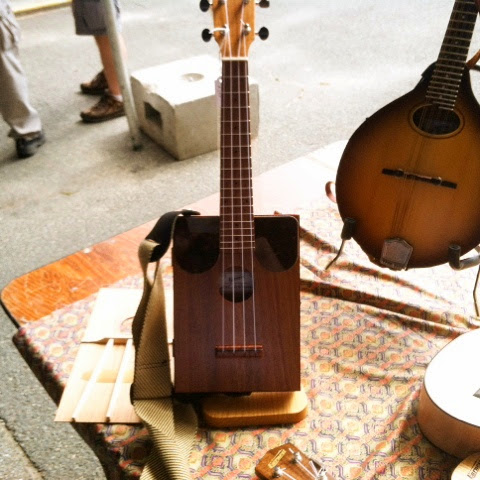
Here's a version of "Country Blues" performed on ukulele.
Here's a version of "Darling Cora" performed on banjo.
Set Three: Songs; Disc Two; Track Two: "Feather Bed" performed by Cannon's Jug Stompers. "Vocal solo with harmonica, banjo, jug, guitar." Recorded in Memphis on September 9, 1928. Original issue Victor V-38515B.
For biographical information on Gus Cannon and the other members of Cannon's Jug Stompers, see the entry on "Minglewood Blues."
"Feather Bed" is bluesy song with a rambling lyric.
I remember the time just before the war, Colored man used to hunt him out chips 'n' straw. But now, bless God, old master's dead. Colored man plumb fool about feather bed. Eee-hee, my gal Nancy. Over the road I'm bound to go.
I went uptown goin' to shriek and howl. Think I heard my baby cry. Eee-wee-mmm, honey. Oh, Lord, I'm bound to go. Wee-eee-eee, baby. Oh, Lord, I'm bound to go.
I went downtown, didn't mean no harm. Police grab me right by my arm. Soon I began to pitch; I began to rear, Feel like strollin' in the air. Ooo-woo-ooo, baby. Over the road I'm bound to go.
I went downtown, doin' my best, Find the boys that stole the vest. Went on around 'bout the Court Square Find the boys that done stole the coat. Hee-hee-eee, baby. Oh Lord, I'm bound to go.
Now I knew Joe Louis was in the stand, Had them law books in his hands. I began to pitch, pull out a writ, began to read to me. Said, "Nigger, you been stealin' in the first degree." Eee-eee-eee, baby. Over the road I'm bound to go.
Ev' old Britt and Moses Brown Said, "I'm going 'cross Cripple Creek, go into town." Ooo-ooo-ooo, baby. Over the road I'm bound to go.
Unlike "Minglewood Blues," which featured Ashley Thompson on vocal, "Feather Bed" features the singing of Cannon himself. Cannon's voice is remarkable both for its richness, but also for the wordless moans sung at the end of each verse. Cannon also performs on banjo and jug. The song also features the remarkable harmonica playing of Noah Lewis. The guitar is played by Elijah Avery, who replaced Thompson in the group.
The lyrics veer quickly from a recollection of life before emancipation (a "Colored man" slept on "chips 'n' straw," while today he sleeps on a feather bed) to a somewhat jumbled account of a trial. In his notes, Smith points out that the lyric "over the road I'm bound to go" is "seldom heard other than in songs dealing with prison." Although it is never explicitly stated in the song that the speaker is found guilty and sent to jail, it may be inferred by the constant refrain "over the road I'm bound to go." It is significant that the next three songs that follow "Feather Bed" all deal with, or make mention of, prisons or jailhouses. For this reason, the first line's comment that "colored man plumb fool about feather bed" may be intended to be ironic, given that the speaker is headed for accommodations that a far from plush.
The song makes mention of a "Joe Louis," although the context of the lyric makes it clear that this Joe Louis is not the boxer. The fighter named Joe Louis does, however, turn up in a song that appears on volume four of the Anthology.
According to Smith's notes, "the melody used in this recording is usually called "Lost John."" There are several songs recorded as "Lost John" and there is some suggestion that this song is related to the song written by W.C. Handy as "Long Gone John From Bowling Green." Here are the lyrics to a version titled "Long John" that was recorded by John and Alan Lomax in 1934: It's a long John He's a long gone Like a turkey through the corn Through the long corn
Well my John said in the ten chap ten If a man die He will live again Well they crucified Jesus And they nailed him to the cross Sister Mary cried My child is lost
Well Long John He's long gone He's long gone Mister John John Oh Big-Eye John O John John It's a long John
Says-uh Come on gal And-uh shut that door Says The dog's is coming And Ive got to go
Its a long John He's long gone Its a long John He's a long gone
WEll-a two three minutes Let me catch my wind In-a two three minutes I'm gone again
He's long John He's long gone He's long gone He's long gone
Well my John said Just before he did Well I'm going home See Mary Lid
He's John John Old John John With his long clothes on Just-a skippin through the corn
Well my John said On the fourth day Well to tell my rider That I'm on my way
Hes long gone He's long gone He's long gone Its a long John
Gonna call this summer Aint gon'call no more If I call next summer Be in Baltimore
The Shameless Plug Department: The sixth episode of the "Where Dead Voices Gather" podcast is finally up! It's an all fiddle episode featuring fiddle tunes from both black and white artists, as well as three tracks from the Middle East! Also available on iTunes! Subscribe today so you don't miss a single episode. It's free and it doesn't hurt. Who can ask for more?
You can also become a fan of "Where Dead Voices Gather" on Facebook and follow us on Twitter. Where Dead Voices Gather: Using today's technology to promote yesterday's music!
Remember that I host "Doin' The Thing," a weekly jazz program on KRML 1410 AM and 94.7 FM in Carmel, California. The show airs from 8 PM to 10PM (Pacific Time) on Sunday nights. You can also listen online by visiting the KRML website at 8 PM Pacific, 11 PM Eastern Time. Please tune in and give me feedback!
Here's Merle Travis performing a version of "Lost John" that makes the connection with W.C. Handy's song quite explicit.
Set Three: Songs; Disc One; Track Seven: "I Wish I Was A Mole In The Ground" perfor1med by Bascom Lamar Lunsford, "The Minstrel of the Appalachians". "Vocal solo with 5-string banjo." Recorded in Ashland, Kentucky on April, 1928. Original issue Brunswick 219B(132).
For biographical information on Bascom Lamar Lunsford, see the entry for "Dry Bones."
Bascom Lamar Lunsford on "I Wish I Was A Mole In The Ground":
The title of this mountain banjo song is "I Wish I Was A Mole In The Ground." I've known it since 1901 when I heard Fred Moody, then a high school boy, sing it down in Burke County. Fred lives in Haywood County, North Carolina, and the footnote to the song is that the "bend" referred to is the bend of the Pigeon River in Haywood County, North Carolinia. I played it as a request of my mother back in 1902. It was the last request she ever made of me. I was teaching that time at Doggett's Gap at public school in Madison County, and returned to my school on Sunday evening. She was interested in my picking the banjo, and she asked me to get the five-string banjo down and play "I Wish I Was A Mole In The Ground." I went away, and she grew sick and passed away and that was the last request she ever made of me.
In contrast to Lunsford's statement that the "bend" in the song refers to "the bend in the Pigeon River," Smith's notes claim that it refers to "the Big Bend Penitentiary." This makes more sense, in the context of the song, than Lunsford's interpretation. However, I have been unable to find any information on such a penitentiary, or indeed to confirm that it ever existed.
I wish I was a mole in the ground. Yes, I wish I was a mole in the ground. 'F I'se a mole in the ground, I'd root that mountain down, And I wish I was a mole in the ground.
Oh, Kimpy wants a nine-dollar shawl. Yes, Kimpy wants a nine-dollar shawl. When I come o'er the hill with a forty-dollar bill, 'Tis, "Baby, where you been so long?"
I been in the Bend so long. Yes, I been in the Bend so long. I been in the Bend with the rough and rowdy men. 'Tis, "Baby, where you been so long?"
I don't like a railroad man. No, I don't like a railroad man. 'Cause a railroad man, they'll kill you when he can, And drink up your blood like wine.
Oh, I wish I was a lizard in the spring. Yes, I wish I was a lizard in the spring. 'F I'se a lizard in the spring, I'd hear my darlin' sing, An' I wish I was a lizard in the spring.
Come, Kimpy, let your hair roll down. Kimpy let your hair roll down. Let your hair roll down and your bangs curl around. Oh, Kimpy, let your hair roll down.
I wish I was a mole in the ground. Yes, I wish I was a mole in the ground. 'F I'se a mole in the ground, I'd root that mountain down, An'I wish I was a mole in the ground.
Like "Sugar Baby," "I Wish I Was A Mole In The Ground" is a song that Greil Marcus makes much of. In his book, Lipstick Traces, he writes:
I disagree with Marcus's reading of "I Wish I Was A Mole In The Ground." Burrowing creatures, such as moles, take physical comfort from being in enclosed spaces. If you've ever had a hamster, you've probably observed it sleeping or just hanging out in those clear plastic tunnels take make up their habitats. Rather than wishing for "negation," it seems to me that the speaker in the song is wishing for the comfort of home.
This is further supported by the interpretation of "bend" (which is sometimes sung as "pen") as the Big Bend Penitentiary (where the speaker has been "so long" with "the rough and rowdy men"). After a long incarceration, it seems only natural that the speaker wishes to be someplace he feels he belongs. A mole certainly is at home in the ground.
In other versions of this song, "Kimpy" is sung as "Tempe" or "Tempy."
Bob Dylan appears to reference this song in his "Stuck Inside of Mobile With The Memphis Blues Again" in the line Mona tried to tell me To stay away from the train line. She said that all the railroad men Just drink up your blood like wine.
The "railroad men" who "drink up your blood like wine" are likely not simply railroad employees (such as engineers or conductors) but rather the owners of the railroads, such as Jay Gould (1836-1892), who were known for their ruthless business practices.
The Shameless Plug Department: The sixth episode of the "Where Dead Voices Gather" podcast is finally up! It's an all fiddle episode featuring fiddle tunes from both black and white artists, as well as three tracks from the Middle East! Also available on iTunes! Subscribe today so you don't miss a single episode. It's free and it doesn't hurt. Who can ask for more?
You can also become a fan of "Where Dead Voices Gather" on Facebook and follow us on Twitter. Where Dead Voices Gather: Using today's technology to promote yesterday's music!
I would like to announce that beginning May 9, 2010, I will be hosting "Doin' The Thing," a weekly jazz program on KRML 1410 AM and 94.7 FM in Carmel, California. The show airs from 8 PM to 10PM (Pacific Time) on Sunday nights. You can also listen online by visiting the KRML website at 8 PM Pacific, 11 PM Eastern Time. Please tune in and give me feedback!
Here is Matt Costa performing a version of "I Wish I Was A Mole In The Ground" on the acoustic guitar.
This is the East River String Band (with cartoonist R. Crumb on mandolin!) performing a version of the song.
Set Three: Songs; Disc One; Track Six: "Sugar Baby" perfor1med by "Dock" Boggs. "Vocal solo and 5-string banjo, with guitar by Hub Mahaffy." Recorded in New York on March 9, 1927. Original issue Brunswick 118B(01).
Moran Lee Boggs was born in West Norton, Virgina on February 7, 1898, the youngest of ten children. His nickname, "Dock," was reportedly given to him because of his resemblance to the local physician. His father, a carpenter and blacksmith, taught his children music from an early age. As a small boy, Boggs came under the influence of an African-American guitarist known only as "Go Lightning." In interviews with Mike Seeger, Boggs recalled how he followed "Go Lightning" around, hoping he would stop and play for change. Boggs also recalled sneaking into the African-American mining settlements to listen to string-bands. He became enamored of the African-American style of banjo picking, which differed from the frailing style he had learned from his siblings.
As an adult, Boggs worked as a coal miner, but he continued to play the banjo, learning songs from his siblings, as well as from local musicians. Around 1918 he is believed to have started performing publicly at parties.
Around 1927, Boggs auditioned for Brunswick records. Although nervous enough to require whiskey to calm him down and performing on a borrowed instrument, Boggs passed the audition and traveled to New York to record eight sides, including "Sugar Baby" and "Country Blues," both of which appear on the Anthology. The success of the records allowed Boggs to quit mining and work exclusively as a musician, performing at parties and in mining camps.
In 1929, Boggs traveled to Chicago for a recording session for Lonesome Ace Records. The records failed to sell, however, and a subsequent audition for Okeh did not result in a contract. Between the Depression and the objection of Boggs' wife and neighbors, Boggs decided to pawn his banjo and give up music forever. He returned to coal mining, which he did until his retirement in 1952.
With the release of the Anthology, Boggs' music found a new audience, and in 1963 he was contacted by Mike Seeger. Coincidentally, Boggs had taken up the banjo again and had been practicing for several months before his rediscovery. Boggs went on to record three albums for Folkways Records and perform in clubs and at folk music festivals. He died on February 7, 1971, his 73rd birthday.
In 1968, Jack Wright, a protege of Boggs', started the Dock Boggs Festival which is held annually in Norton, Virginia.
Oh, I've got no sugar baby now. All I can do for seek peace with you, And I can't get along this a-way. Can't get along this a-way.
All I can do, I've said all I can say. I'll send it to your mama next payday. Send you to your mama next payday.
Got no use for the red rockin' chair, I've got no honey baby now. Got no sugar baby now.
Who'll rock the cradle, who'll sing the song? Who'll rock the cradle when I'm gone? Who'll rock the cradle when I'm gone?
I'll rock the cradle, I'll sing the song. I'll rock the cradle when you gone. I'll rock the cradle when you gone.
It's all I can do, said all I can say. I will send you to your mama next payday.
Laid her in the shade, give her every dime I made. What more could a poor boy do? What more could a poor boy do?
Oh, I've got no honey baby now. Got no sugar baby now.
Said all I can say, I've done all I can do, And I can't make a living with you. Can't make a living with you.
Greil Marcus, in his Invisible Republic, makes much of this song and of Boggs. He describes Boggs as a man who "sounds like his bones are coming through his skin" when he sings. Marcus also makes "Sugar Baby" sound particularly sinister. At one point, Marcus singles out the following stanzas:
Who'll rock the cradle, who'll sing the song? Who'll rock the cradle when I'm gone? Who'll rock the cradle when I'm gone?
I'll rock the cradle, I'll sing the song. I'll rock the cradle when you gone. I'll rock the cradle when you gone.
To Marcus, the answering voice ("I'll rock the cradle") is terrifying and unearthly. It is at this point that Marcus's romanticism gets the better of him.
A close reading of the lyrics to "Sugar Baby" reveals nothing sinister or supernatural whatsoever. The song is told from the point of view of a man who has had enough of his wife. He describes how he "gave her every dime [he] made" and yet he "can't make a living with [her]". He plans to send his wife back to her mother "next payday."
The question about "rock[ing] the cradle" is asked by the wife when she is threatened with being sent away. "Who will look after the children?" she asks, to which the husband simply replies, "I will."
Marcus's supernatural reading of "Sugar Baby" is, in large measure, influenced by Boggs' performance. It is undeniable that Boggs has an unusual voice. He seems to strangle each word in his throat as he sings it. Yet when one listens to the recordings of Boggs from the early '60s, it becomes clear that Boggs' voice isn't so odd. Certain nuances of his voice are clearly absent from his 1927 recordings, likely due to the relatively primitive recording techniques. Captured on magnetic tape using more sensitive and sophisticated recording equipment, Boggs' voice loses much of its uncanny quality.
Like "The Coo Coo Bird" and "East Virginia," "Sugar Baby" seems creepy because it is performed on the banjo in a minor key. This quality is enhanced on this particular recording due to Boggs' unusual banjo technique. The style he played is called "up-picking," which involves picking upwards on the first two strings and playing one of the other three strings with the thumb.
Two interesting miscellaneous notes about "Sugar Baby": "Sugar Baby" was recorded on March 9, 1927, exactly two days before Rabbit Brown recorded "James Alley Blues."
"Sugar Baby's" label contains a rare instance of crediting a musician other than the recording artist. The label (and Smith's subsequent entry in the liner notes) credits one Hub Mahaffy as the guitar player on this recording. Who was Hub Mahaffy? Nothing is known of him, other than the fact that he accompanied Boggs on this session.
The Shameless Plug Department: The sixth episode of the "Where Dead Voices Gather" podcast is finally up! It's an all fiddle episode featuring fiddle tunes from both black and white artists, as well as three tracks from the Middle East! Also available on iTunes! Subscribe today so you don't miss a single episode. It's free and it doesn't hurt. Who can ask for more?
You can also become a fan of "Where Dead Voices Gather" on Facebook and follow us on Twitter. Where Dead Voices Gather: Using today's technology to promote yesterday's music!
I would like to announce that beginning May 9, 2010, I will be hosting "Doin' The Thing," a weekly jazz program on KRML 1410 AM and 94.7 FM in Carmel, California. The show airs from 8 PM to 10PM (Pacific Time) on Sunday nights. You can also listen online by visiting the KRML website at 8 PM Pacific, 11 PM Eastern Time. Please tune in and give me feedback!
Here's a video of "Sugar Baby" performed on fiddle and (off camera) banjo. The fiddle and vocal are by the author of the wonderful Old Weird America blog!
Here's a more modern reading by the Indaba Harry Smith Project, featuring Dale Crowley on keyboards, Jussi Salminen on electric and acoustic guitar and banjo, Scott Swatzell on drums and vocal, and Mike Tobin on bass.
Set Three: Songs; Disc One; Track Three: "Minglewood Blues" performed by Cannon's Jug Stompers with Noah Lewis. "Vocal solo with harmonica, banjo, jug, guitar." Recorded in Memphis on January 30, 1928. Original issue Victor 21267A(41803).
Cannon's Jug Stompers was a Memphis based jug band. For more information on the jug as a musical instrument, see the entry for "Newport Blues" by the Cincinnati Jug Band.
Cannon's Jug Stompers was initially formed in response to the success of Will Shade's Memphis Jug Band, which appears later on this disc. "Minglewood Blues" was recorded at the Jug Stomper's first recording session in January of 1928.
The Jug Stompers consisted of Gus Cannon on banjo and jug, Ashley Thompson on guitar, and Noah Lewis on harmonica.
Gus Cannon was born on September 12, 1883 in Red Banks, Mississippi, but was largely raised in Clarksdale. Cannon was an entirely self-taught musician, teaching himself on a banjo that he made out of a raccoon skin stretched across as frying pan. He was greatly influenced by two members of W.C. Handy's group, which was based in Clarksdale at the time. Fiddle player Jim Turner inspired Cannon to learn the fiddle, while guitarist Alex Lee taught Cannon the blues song "Poor Boy Long Way From Home" (which appears later on the "Songs" set as "Poor Boy Blues"), teaching Cannon to use a knife as a slide. Cannon picked up the slide technique, utilizing it in his banjo playing.
Cannon moved to Memphis around 1907, where he met and began performing with Jim Jackson. Around this time, he met Noah Lewis and Ashley Thompson, both of whom would later become members of Cannon's Jug Stompers. They would form their first band in 1914, playing at parties and dances. Cannon made his first recordings for Paramount Records in 1927, credited as "Banjo Joe" and performing with Blind Blake. The following year, he made his first recordings with the newly formed Jug Stompers. Not long after, a fourth member of the group, Hosea Woods, was added contributing guitar, banjo, kazoo, and vocals.
The Jug Stompers became one of Memphis's most popular jug bands during the 1930s. Among the songs recorded by the group were "Viola Lee Blues," "Big Railroad Blues," and "Walk Right In." Cannon also appeared in the 1929 King Vidor film Hallelujah!
Following the release of the Anthology, Cannon was rediscovered. He made records for Folkways and performed at colleges and coffee houses. His song "Walk Right In" was successfully covered by the Rooftop Singers. Cannon sued for royalties and was able to live out the rest of his life in relative comfort. In 1963, he recorded an album for Stax Records in the company of Will Shade, Sam Lindsay, and Milton Roby.
Cannon died on October 15, 1979.
Harmonica player Noah Lewis, the composer of "Minglewood Blues," was born on September 3, 1895 in Henning, Tennessee. He was best known for his trick of playing two harmonicas simultaneously, one with his mouth and the other with his nose (which calls to mind a similar trick in which reed player Rahsaan Roland Kirk would play the flute with his nose). Although Lewis was best known for his work with Cannon, he did form his own jug band in 1930 with Sleepy John Estes and Yank Rachel (both of whom appear later on the "Songs" volume, performing "Expressman Blues"). The Noah Lewis Jug Band recorded a revised version of "Minglewood Blues," with new lyrics, under the title "New Minglewood Blues." It was this version of the song which was covered by the Grateful Dead on their first album as "New New Minglewood Blues."
Lewis died on February 7, 1961 of gangrene brought on by frostbite.
Little is known about Ashley Thompson, who plays guitar and sings lead vocal on this recording. His birth and death dates, along with the details of his life outside of his association with Cannon, are completely unknown. Don't you never let one woman rule your mind. Don't you never let one woman rule your mind. Said she keep you worried, troubled all the time.
Don't you think your fairer was li'l and cute like mine. Don't you wish your fairer was li'l and cute like mine. She's a mar- She's a married woman, But she comes to see me all the time.
Don't you never let a woman rule your mind. Don't you never let one woman rule your mind. Said she keep you worried, troubled all the time.
Well I got a letter mama and you ought to heard it read. Well I got a letter Lord and you ought to heard it read. If you comin' back baby now be on your way.
"Minglewood Blues" both a cautionary song and a boast. The speaker warns men against "let[ting] one woman rule [their] mind[s]," stating that she will "keep you worried, troubled all the time." The speaker then boasts of his sexual conquests, particularly with married women. Lewis's lyrics go into greater detail in his "New Minglewood Blues," in which he claims that "stealin' women from their monkey men" is his "number one occupation": I was born in the desert, raised in a lion's den. I was born in the desert, raised in a lion's den. My number one occupation, stealin' women from their monkey men.
If you're ever in Memphis, better stop by Minglewood. If you're ever in Memphis, better stop by Minglewood. The women down there, they don't mean a man no good.
I was born in the desert, raised in a lion's den. I was born in the desert, raised in a lion's den. My number one occupation, stealin' women from their monkey men.
Minglewood was a lumber camp near the Mississippi. As with many labor camps and plantations, Minglewood hired musicians to perform at parties and danced on the weekends. Noah Lewis was hired to perform at Minglewood and reportedly wrote this song afterward.
In his notes, Smith points out that Thompson's vocal style, which consists of a "buzzing vibrato and relatively small intervals" is typical of Memphis singers. Smith made a similar observation in his notes to "He Got Better Things For You."
The notes to "Minglewood Blues" contain an uncharacteristic error on Smith's part. The name of the artist is curiously omitted from its customary place immediately under the song title.
"Minglewood Blues" is the first track on the "Songs" volume to feature African American musicians, and the first since "Newport Blues" to feature a jug band. It is the second song in a row to deal with heartache related to women.
It has been brought to my attention that a documentary film on Gus Cannon has been recently released titled Chasin' Gus's Ghost. It looks intriguing to say the least. Thanks to Hans Eichinger for hipping me to this film...
The Shameless Plug Department: The fifth episode of the "Where Dead Voices Gather" podcast is finally up! It's an all jazz episode featuring early jazz recordings by the Original Dixieland Jass Band, Jelly Roll Morton, Louis Armstrong, Bessie Smith, and a whole lot more! Also available on iTunes! Subscribe today so you don't miss a single episode. It's free and it doesn't hurt. Who can ask for more?
You can also become a fan of "Where Dead Voices Gather" on Facebook and follow us on Twitter. Where Dead Voices Gather: Using today's technology to promote yesterday's music!
I would like to announce that beginning May 9, 2010, I will be hosting "Doin' The Thing," a weekly jazz program on KRML 1410 AM and 94.7 FM in Carmel, California. The show airs from 8 PM to 10PM (Pacific Time) on Sunday nights. You can also listen online by visiting the KRML website at 8 PM Pacific, 11 PM Eastern Time. Please tune in and give me feedback!
Here is a version of "Minglewood Blues" performed by the Old Crow Medicine Show in a live appearance at the late lamented Tower Records.
Here is a version of "New Minglewood Blues" performed by the Grateful Dead in 1994.
Two from the American Southwest
-
I wanted to focus on two examples of local, almost “one-off” 78 rpm
releases that feature music of the American southwest, in the states of
Arizona and New...
71 “Poor Boy Blues” by Ramblin’ Thomas
-
“Poor Boy Blues” by Ramblin’ Thomas (recorded in Chicago, November 1928)
Poor boy, poor boy. Poor boy long ways from ...
Continue reading
Domain Changes
-
Change is good, you know. And over the past several months, I've spent more
and more time on what was originally meant to stand in as a side-project to
thi...
Dumps.
-
I want to be stripped of all those things that prevent me from fulfilling
my potential and get me to moments like this, where I sit in bed and engage
in a ...